

Most AI projects fail not because the technology doesn’t work, but because it doesn’t act.
For years, organizations have invested in AI systems that can analyze data, generate insights, and answer questions.
Yet when it comes to real operations, resolving a customer issue, processing an invoice, responding to a security alert, or coordinating teams, humans still do most of the actual work. Insights stop at dashboards. Recommendations sit in reports. Decisions wait in inboxes.
This is where agentic AI changes the equation.
Recent studies show that over 88% of enterprise AI initiatives never reach full production, often because they fail to integrate into real workflows. Operational delays caused by manual decision-making cost large organizations millions annually across IT incidents, finance operations, customer support, and supply chains.
Agentic AI directly targets these gaps. Unlike conventional AI systems that only inform decisions, agentic AI systems can plan, take actions, use tools, and coordinate workflows with humans, while humans remain in control where it matters.
These systems don’t just answer questions; they resolve tickets, trigger processes, gather evidence, escalate intelligently, and move work forward.
In this blog, we’ll explore the most impactful agentic AI use cases across different sectors to help leaders, operators, and product teams understand where agentic AI creates real value today and how to apply it responsibly and effectively.
Practical Agentic AI Use Cases That Solve Real Operational Problems
The following agentic AI use cases demonstrate how organizations are solving real operational problems today.
1. Healthcare: Revolutionizing Patient Care and Operations
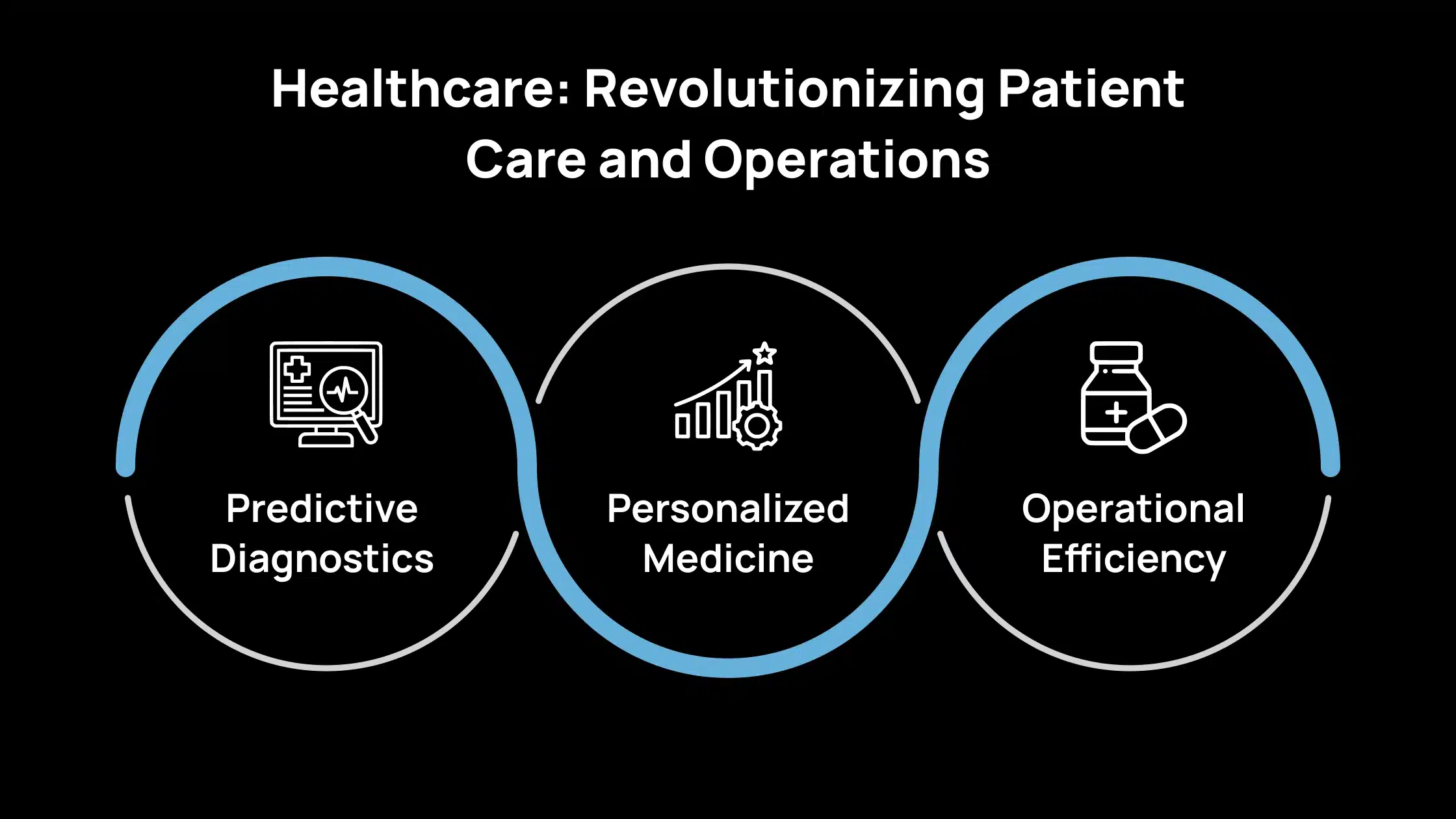
Predictive Diagnostics
Agentic AI is transforming how healthcare providers diagnose and treat patients by leveraging advanced algorithms to analyze large volumes of data. It predicts medical conditions by analyzing historical data, symptoms, and patterns that are hard for a human to spot on their own.
For example, in oncology, AI is already being used to detect early-stage cancers, such as breast and lung cancers, by analyzing medical imaging and patient data. These AI systems identify subtle patterns that may indicate cancer, often before symptoms appear.
Key Benefits:
- Reduced Human Error: AI reduces the risk of human error in diagnosis, ensuring more accurate results.
- Faster Diagnostics: AI can process large datasets quickly, helping healthcare providers identify conditions sooner.
- Better Patient Outcomes: With faster and more accurate diagnoses, patients can start treatment earlier, improving their chances of recovery.
Personalized Medicine
AI is making treatments more personal and effective by tailoring them to an individual’s unique genetic makeup and lifestyle. By analyzing a patient’s genetic data, AI can help doctors choose the most effective treatment options and predict how they might respond to different medications.
For instance, in pharmacogenomics, AI-driven recommendation systems suggest medications based on a patient’s genetic profile, thereby improving treatment outcomes and reducing side effects.
Some of the benefits are:
- Enhanced Treatment Effectiveness: AI helps doctors choose the right treatment for each patient, increasing the likelihood of success.
- Reduced Side Effects: By personalizing treatments, AI minimizes the chances of adverse reactions, making treatments safer.
Operational Efficiency
Hospitals and healthcare providers face constant pressure to optimize their resources—staff, equipment, and hospital beds. AI is playing a key role in improving operational efficiency by automating many processes.
For example, AI-driven scheduling systems can predict when doctors and nurses will be needed, while inventory management systems can ensure that essential supplies are always available. These systems use real-time data to make sure resources are allocated as effectively as possible. Some of the important benefits are:
- Better Resource Allocation: AI helps ensure that resources like staff and equipment are available when and where they’re needed most.
- Lower Operational Costs: By automating routine tasks, AI reduces the need for manual labor and minimizes waste.
- Enhanced Patient Care: With resources properly managed, hospitals can provide better care and faster service to patients.
2. Finance: Enhancing Decision Making and Risk Management
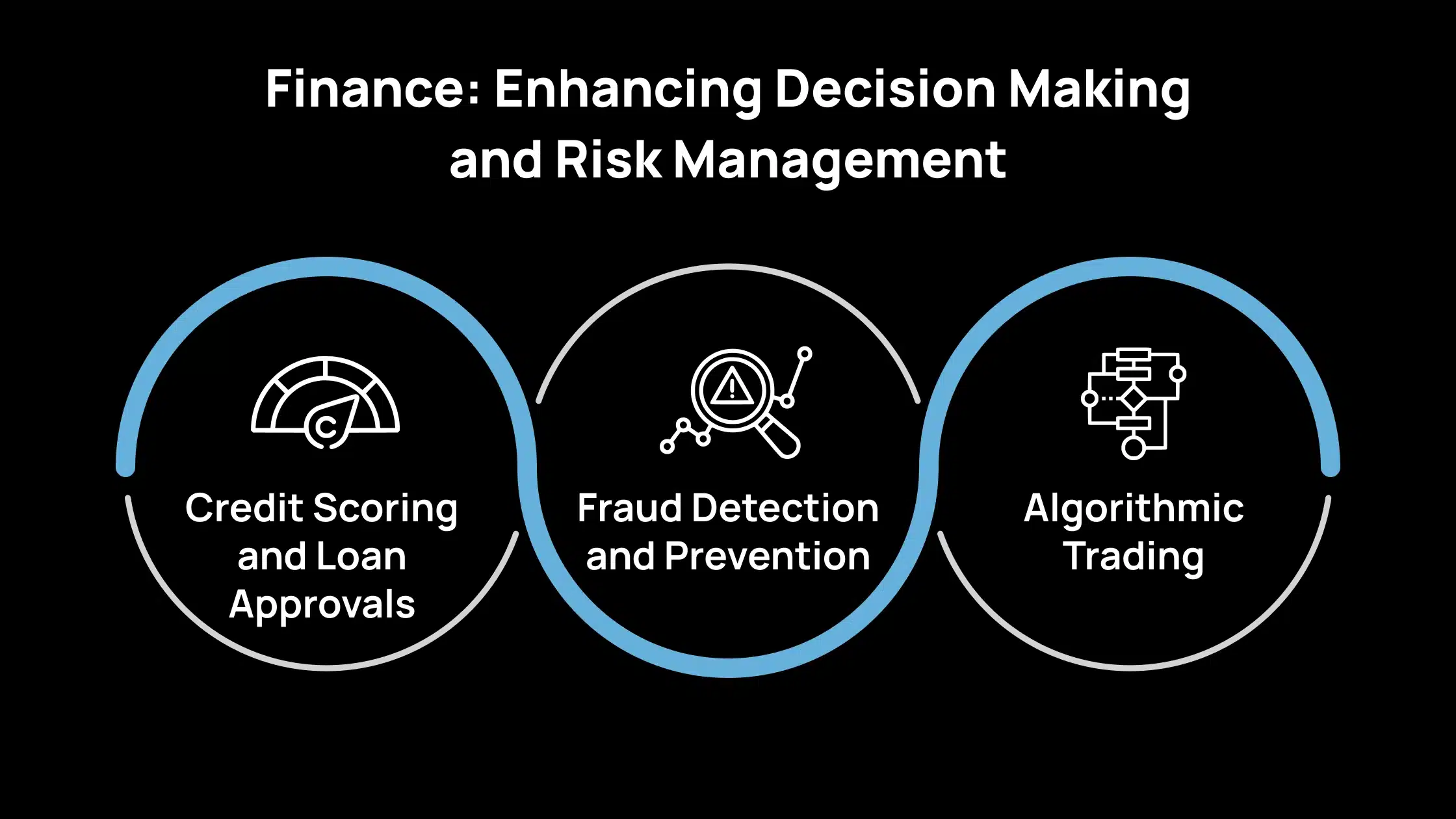
Credit Scoring and Loan Approvals
Rather than relying solely on traditional credit scoring methods, AI assesses applications faster and with greater accuracy, predicting default risk and evaluating creditworthiness by analyzing large datasets.
Fintech companies are leading the charge, using AI systems to quickly and more accurately determine whether someone qualifies for a loan. This technology considers a broader range of factors, not just credit scores, to provide a more complete picture of a borrower’s financial health. This helps in:
- Improved Financial Inclusion: By considering additional factors beyond traditional credit scores, AI enables more people to access credit, even those who may have been overlooked before.
- Reduced Bias: AI reduces human bias in loan approval processes, leading to fairer, more objective decisions.
- More Personalized Lending Options: With AI’s insights, lenders can offer more tailored loan terms that better suit an individual’s financial situation.
Fraud Detection and Prevention
Fraud is a growing problem in the financial sector, but AI is stepping in to offer real-time protection. AI uses anomaly detection and pattern recognition to spot fraudulent activities by identifying irregularities in transactions that might indicate fraud.
For example, banks use AI-powered systems to monitor banking transactions 24/7. The moment an unusual activity is detected, such as a large transfer or multiple small withdrawals, it flags it for review. This system works in real-time, helping prevent financial crimes before they cause significant damage. This helps to:
- Enhanced Security: AI offers a proactive approach to fraud detection, improving overall security by catching threats early.
- Faster Detection: AI can spot suspicious activity much quicker than traditional methods, reducing the time fraudsters have to act.
- Prevention of Financial Crimes: By detecting fraud early, AI helps prevent losses and protect customers’ assets.
Algorithmic Trading
Algorithmic trading systems powered by AI are used in high-frequency trading, executing large volumes of trades at speeds humans cannot match.
These AI systems process vast amounts of market data in real time, making investment decisions based on patterns and trends that may not be immediately visible to the human eye. This allows traders to take advantage of minute price changes, maximizing profitability. Some of the benefits are:
- Increased Profitability: AI-driven trading strategies often lead to higher returns by capitalizing on small market fluctuations.
- Reduced Risk: AI’s ability to analyze complex data reduces the likelihood of human error in decision-making, lowering trading risks.
- Improved Trading Speed: AI can execute trades at lightning speed, allowing traders to act faster than the competition.
3. Retail: Transforming Customer Experience and Inventory Management
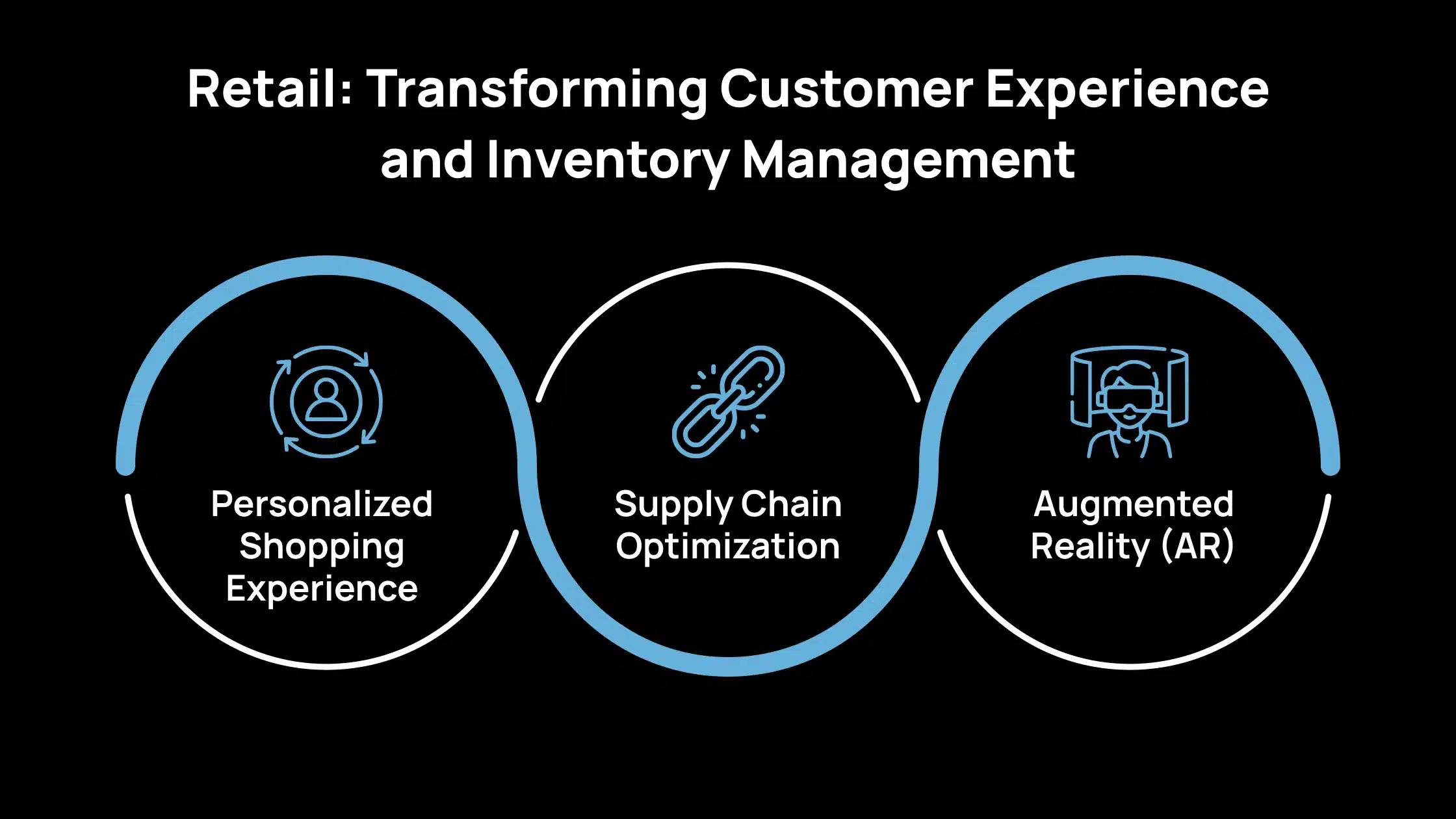
Personalized Shopping Experience
AI-driven recommendation engines are transforming the shopping experience by delivering highly personalized recommendations in real-time. By analyzing customer data, AI can predict what products customers are most likely to purchase based on their browsing history, preferences, and behavior.
For example, e-commerce giants like Amazon and Netflix use AI to recommend products and content that align with your past behavior. Whether you’re browsing for books, electronics, or even movies, AI makes personalized suggestions that feel tailored just for you. This helps in:
- Higher Conversion Rates: By showing customers exactly what they want, AI increases the likelihood of a purchase.
- Improved Customer Loyalty: When customers consistently find products that meet their needs, they’re more likely to return for future purchases.
Supply Chain Optimization
AI algorithms predict demand patterns, optimize inventory levels, and improve delivery timelines. By analyzing data on sales trends, seasonality, and external factors, AI helps retailers maintain optimal stock levels and minimize waste.
Retailers like Walmart and Target are using AI for dynamic pricing and inventory forecasting. This means they can adjust prices in response to demand fluctuations and ensure their shelves are always stocked with what customers want. This helps retailers in:
- Reduced Wastage: AI ensures that products are ordered in the right quantities, minimizing excess stock and waste.
- Improved Delivery Times: AI optimizes delivery routes and schedules, ensuring products get to customers faster.
- Cost Savings: By accurately predicting demand and efficiently managing inventory, AI reduces operational costs for retailers.
Visual Search and Augmented Reality (AR)
With visual search, customers can upload photos of products they like, and AI can find similar items within seconds. For example, if you see a pair of shoes you like on social media, you can use visual search to instantly find similar options on e-commerce websites.
AR takes this a step further by allowing customers to try products virtually. For example, fashion and beauty brands use AI-powered virtual try-ons, letting customers see how clothes, makeup, or accessories will look on them without ever leaving home.
- Enhanced Customer Engagement: Visual search and AR make the shopping experience more interactive and enjoyable.
- Personalized Shopping: Customers can find products that match their specific preferences and style, creating a more tailored experience.
- Improved Brand Interaction: These AI tools foster deeper connections between customers and brands by offering innovative, memorable shopping experiences.
4. Manufacturing: Optimizing Production and Maintenance
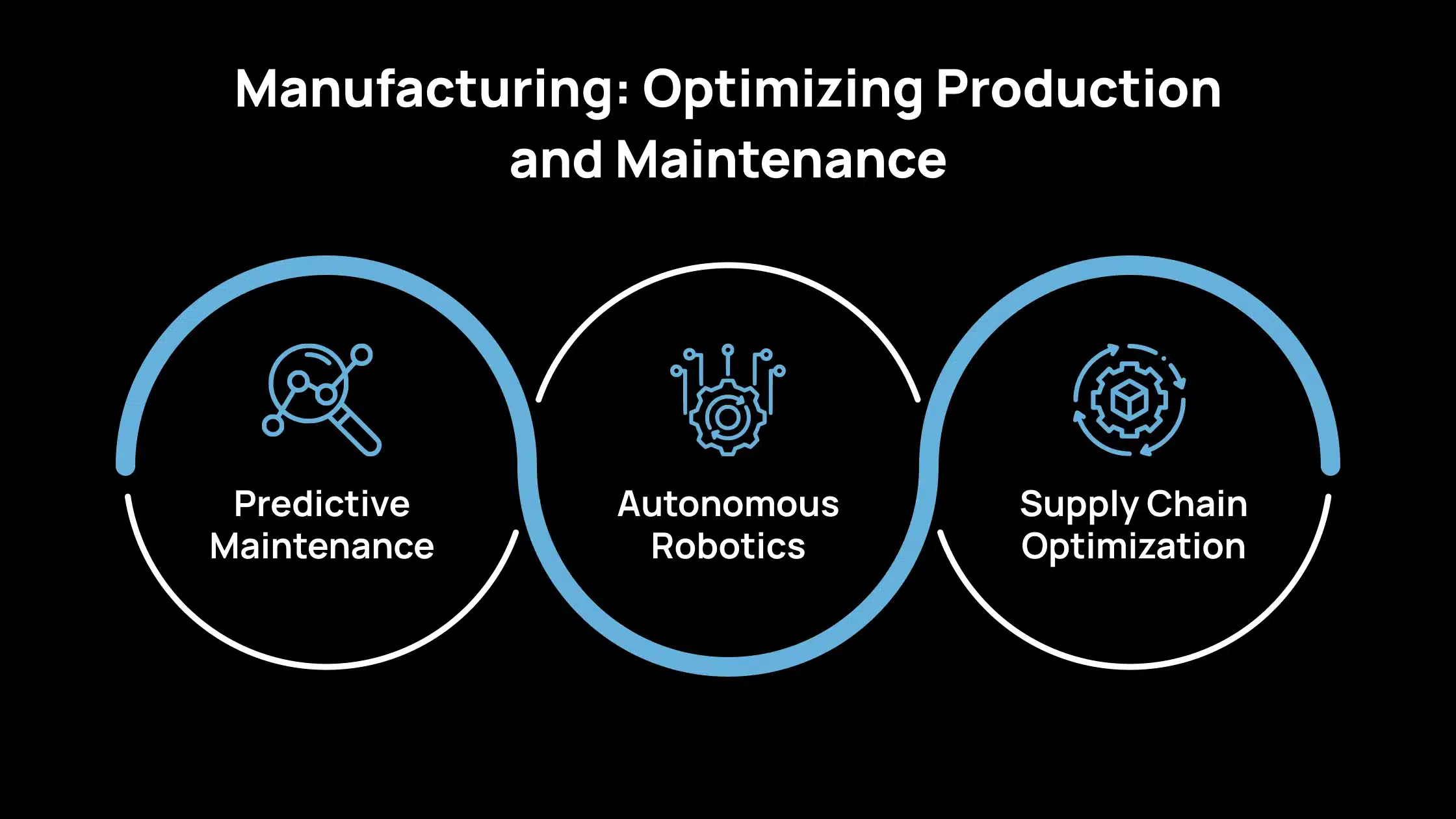
Predictive Maintenance
In manufacturing, downtime is costly. Predictive maintenance, powered by AI, helps you stay ahead of potential machinery failures before they disrupt your operations. AI models continuously monitor machine health by analyzing performance data and predicting when failures may occur. By identifying issues early, you can schedule maintenance in advance, avoiding unexpected breakdowns.
For example, in automotive manufacturing, AI systems monitor machine health and predict when maintenance will be needed. This helps to:
- Reduced Downtime: By preventing sudden machine failures, production lines stay active, reducing interruptions.
- Lower Maintenance Costs: Predictive maintenance reduces the need for emergency repairs, which can be more expensive than planned maintenance.
- Longer Machinery Lifespan: Regular maintenance based on AI insights ensures equipment operates efficiently and lasts longer.
Autonomous Robotics
AI-powered robots are revolutionizing the assembly line by performing tasks with high precision and speed. These robots can take over repetitive and complex tasks, such as assembly, welding, or quality control.
In companies like Tesla, autonomous robots are integral to their manufacturing process, working alongside humans to ensure efficiency and precision.
- Increased Production Efficiency: Robots work faster and without fatigue, leading to higher throughput.
- Higher Precision: AI robots perform tasks with incredible accuracy, ensuring the quality of each product.
- Reduced Labor Costs: By automating routine tasks, you can free up human resources for higher-level activities, reducing manual labor costs.
Supply Chain Optimization
AI is transforming how raw materials are procured, production schedules are managed, and products are distributed. By analyzing data across the supply chain, AI algorithms help optimize operations, ensuring that materials are available when needed and production processes run on time.
For example, companies like Boeing use AI to streamline their manufacturing processes. This helps organizations in:
- Improved Inventory Management: AI ensures that raw materials are ordered in optimal quantities, preventing overstocking or shortages.
- Reduced Waste: By predicting demand and aligning production schedules, AI minimizes waste from excess inventory.
- Faster Production Times: AI streamlines operations, helping manufacturers meet deadlines and increase delivery speed.
5. Transportation and Logistics: Enhancing Mobility and Efficiency
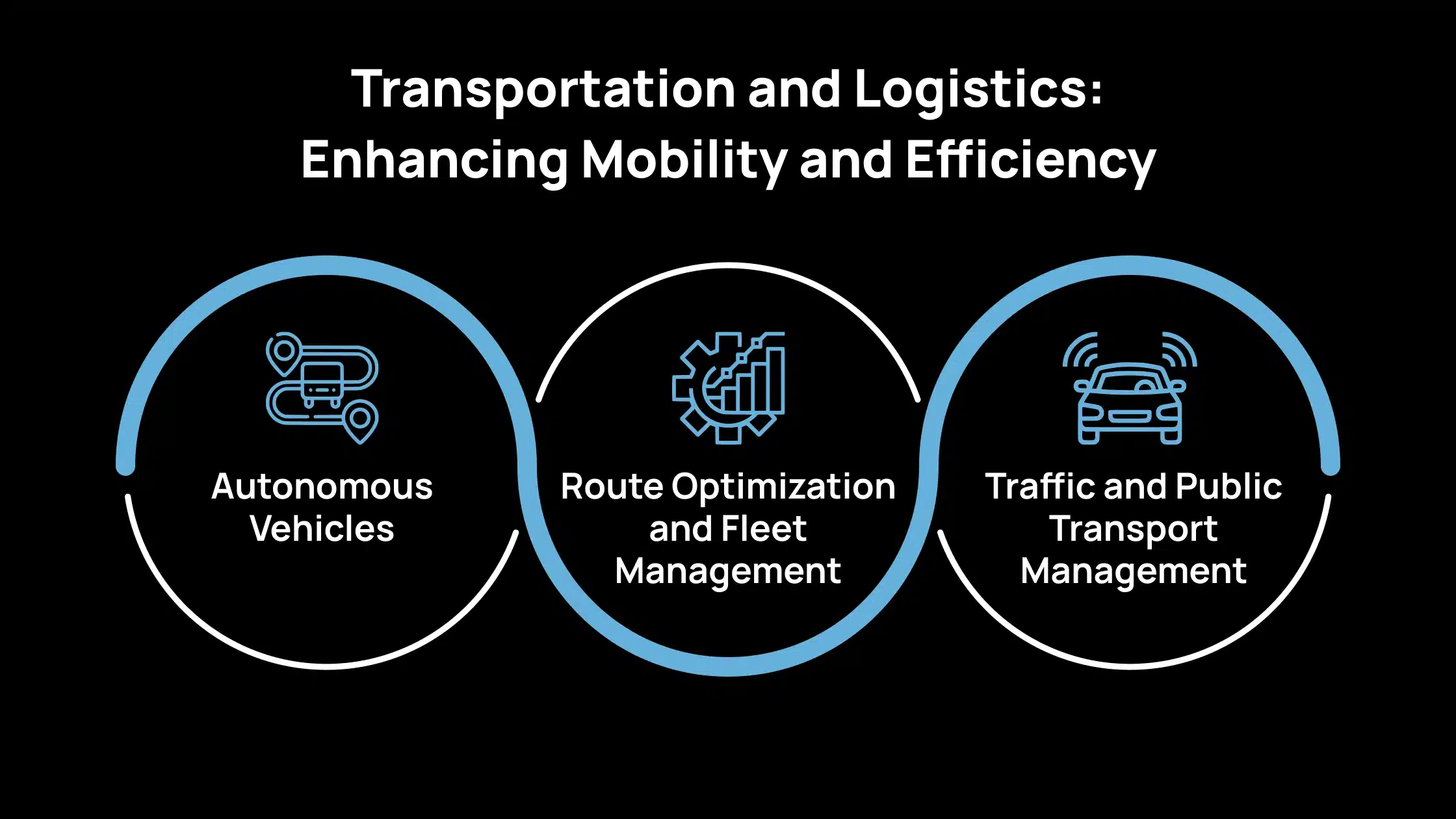
Autonomous Vehicles
AI is changing the way we think about transportation with the rise of autonomous vehicles, including self-driving cars, trucks, and drones. Using AI, these vehicles can navigate roads, avoid obstacles, and make real-time decisions without human intervention.
Companies like Waymo are already using AI to power self-driving cars for ride-sharing, revolutionizing urban transportation. The biggest advantages of autonomous vehicles include safer roads and reduced traffic congestion, as well as lower transportation costs. This helps in:
- Reduced Accidents: AI helps minimize human error, reducing the likelihood of road accidents.
- Improved Traffic Flow: Autonomous vehicles communicate with each other, optimizing driving behavior and reducing congestion.
- Lower Transportation Costs: AI-powered vehicles reduce the need for drivers, cutting operational costs and improving efficiency.
Route Optimization and Fleet Management
AI is also improving how deliveries are made and how fleets are managed. With AI, logistics companies can optimize delivery routes in real-time based on traffic conditions, weather, and other variables. This helps reduce fuel consumption, improve delivery times, and make the best use of available resources.
Companies like UPS use AI to plan the most efficient delivery routes, ensuring packages are delivered on time while reducing fuel costs and emissions. Some of the benefits include:
- Lower Operational Costs: Optimized routes reduce fuel consumption and operational expenses, resulting in more cost-efficient operations.
- Reduced Carbon Footprint: AI-driven route planning helps minimize fuel consumption, reducing the environmental impact of transportation.
- Faster Deliveries: By avoiding traffic and other delays, AI enables faster and more reliable deliveries.
Traffic and Public Transport Management
AI is transforming how cities manage traffic and public transportation systems. By analyzing real-time sensor data, AI systems can predict traffic patterns, optimize traffic light timing, and adjust public transportation routes accordingly.
In smart cities, AI-driven systems help manage traffic lights and public transportation schedules to reduce congestion, improve traffic flow, and enhance the commuter experience. This helps in:
- Reduced Congestion: AI optimizes traffic management to keep traffic flowing smoothly, preventing long delays.
- Improved Commuter Experience: Predictive analytics help improve the accuracy and efficiency of public transportation, making commuting easier.
- More Efficient Transportation Networks: AI enables cities to allocate resources better, improving overall transportation efficiency.
6. Energy: Transforming Sustainability and Efficiency
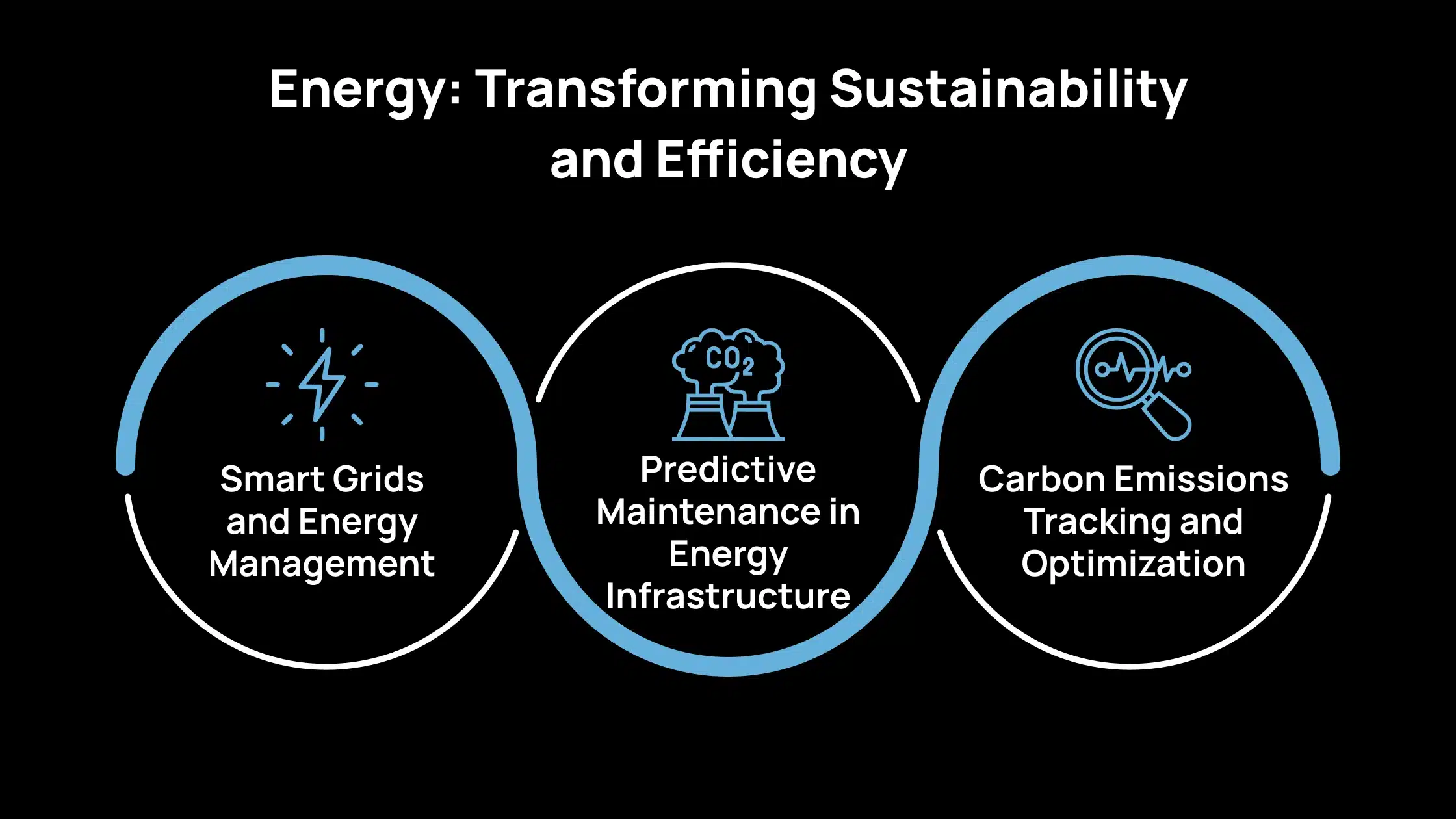
Smart Grids and Energy Management
AI is transforming how we produce, distribute, and consume energy. Through smart grids, AI can optimize energy flow in real-time, adjusting distribution based on demand and usage patterns. These intelligent systems ensure that energy is delivered efficiently, reducing waste and enhancing sustainability.
For example, AI-powered smart grids monitor energy consumption and adjust distribution to prevent overloading and minimize energy loss. This helps in:
- Increased Energy Efficiency: AI helps optimize energy production and distribution, reducing overall waste.
- Reduced Waste: By predicting demand, AI minimizes energy loss during transmission.
- Lower Carbon Emissions: Efficient energy use reduces reliance on fossil fuels, thereby decreasing emissions.
Predictive Maintenance in Energy Infrastructure
AI plays a crucial role in maintaining energy infrastructure, such as wind turbines and solar panels. By using predictive maintenance, AI models can forecast when these systems are likely to fail, enabling timely maintenance to avoid costly downtimes.
For example, in renewable energy installations such as wind farms, AI can predict when turbines need maintenance, helping keep them running smoothly without unnecessary delays. This helps in:
- Reduced Downtime: AI helps identify potential failures before they happen, minimizing downtime and keeping systems running efficiently.
- Increased Reliability: Predictive maintenance ensures that energy infrastructure remains operational and dependable.
- Lower Operational Costs: By preventing unexpected failures, AI reduces the costs associated with emergency repairs and unplanned maintenance.
Carbon Emissions Tracking and Optimization
AI-powered systems are essential for tracking and reducing carbon emissions in energy production. These systems analyze emissions data and optimize processes to reduce environmental impact. AI models can predict the carbon footprint of energy production and suggest ways to minimize it.
For example, AI is used in power plants to monitor emissions and adjust operations to reduce carbon output. This has helped in:
- Enhanced Sustainability: AI helps track and reduce carbon emissions, supporting environmentally friendly energy practices.
- Reduced Environmental Impact: By optimizing energy use, AI reduces environmental impacts.
- Compliance with Regulations: AI helps companies comply with environmental regulations by optimizing operations and minimizing emissions.
7. Education: Personalizing Learning and Administrative Efficiency
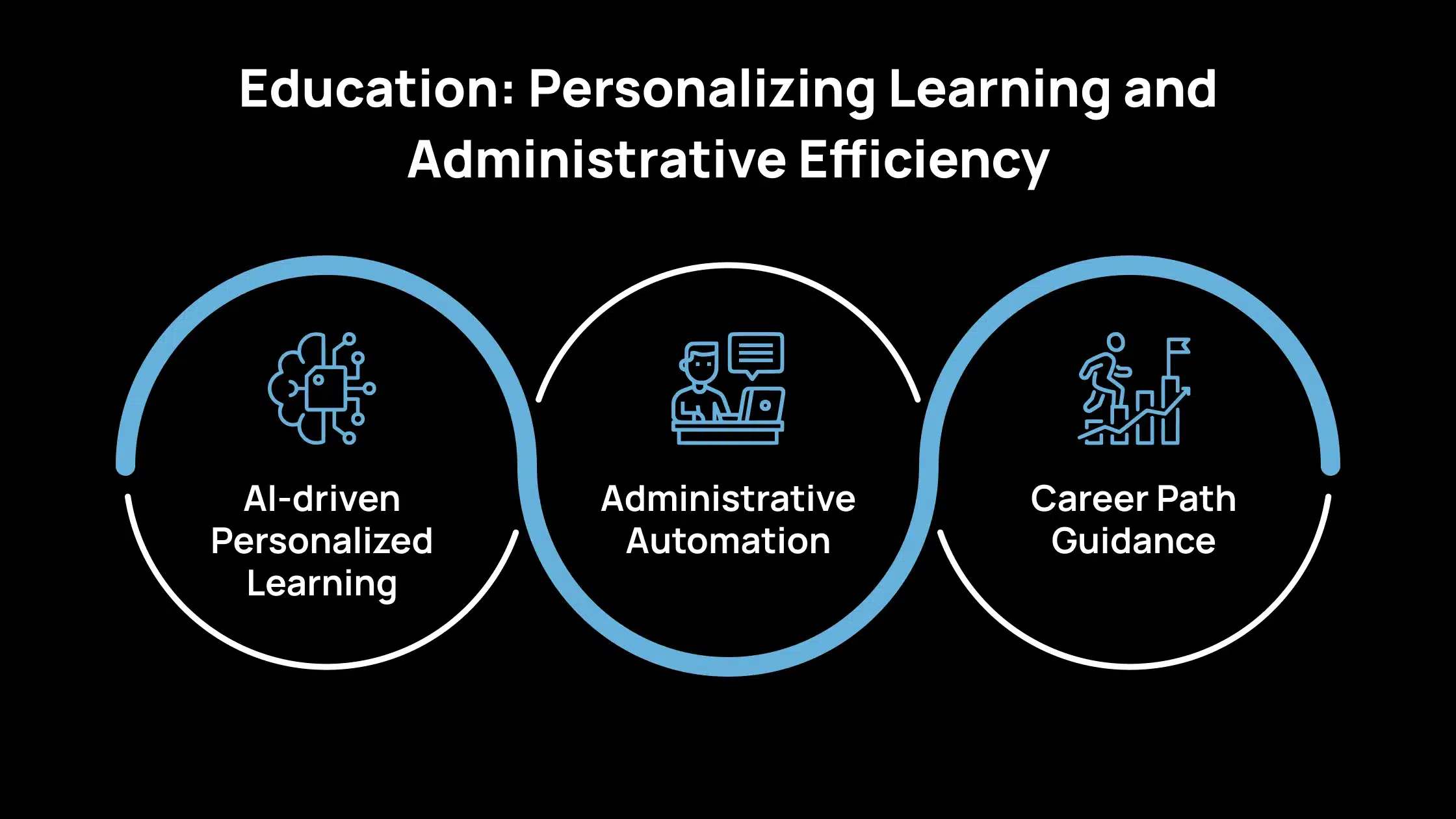
AI-driven Personalized Learning
AI is revolutionizing education by offering personalized learning experiences that cater to individual student needs. These AI systems track student progress, analyze learning behaviors, and adapt content to match the learner’s pace, preferences, and strengths. With this level of personalization, students are more likely to stay engaged and excel in their studies.
For example, platforms like Coursera use AI to recommend courses and content based on a learner’s previous activities and interests. By continuously adapting to the learner’s progress, AI helps create a more effective, personalized educational experience. This helps students in:
- Improved Student Engagement: Personalized learning keeps students engaged by presenting content that aligns with their needs and interests.
- Better Learning Outcomes: AI ensures that students receive the right level of challenge, leading to improved academic performance.
- More Tailored Education: Each student gets a learning experience that adapts to their strengths and areas for improvement, resulting in a more effective education.
Administrative Automation
AI is helping educational institutions reduce administrative workloads by automating tasks like grading, scheduling, and resource allocation. These AI-powered systems can handle routine administrative work, allowing teachers and faculty to focus more on teaching and student interaction.
For example, AI-driven administrative assistants in universities manage class schedules, handle paperwork, and even grade assignments. Some of the benefits include:
- Reduced Administrative Burden: Automating administrative tasks allows educators to focus on what matters most, teaching and student support.
- More Focus on Teaching: With less time spent on administrative duties, educators can dedicate more energy to delivering quality lessons.
- Increased Efficiency: Streamlining administrative processes ensures that operations run smoothly and that resources are allocated more effectively.
Career Path Guidance
AI tools are becoming invaluable in helping students navigate their career paths. By analyzing individual strengths, skills, and the current job market, AI provides personalized career guidance, recommending potential job roles, industries, and additional skills needed for future success.
Higher education institutions are increasingly integrating AI-powered career advising tools that suggest tailored career paths based on data-driven insights. This helps in:
- Better Alignment with Industry Demand: AI helps students understand what skills are in demand and guides them towards careers with strong growth prospects.
- Improved Career Prospects: By providing students with targeted advice and personalized development plans, AI enhances their chances of securing successful careers.
- Personalized Career Guidance: AI ensures that each student receives advice suited to their unique skills and aspirations, leading to better career outcomes.
How Avahi Helps You Turn AI Into Real Business Results?
If your goal is to apply AI in practical ways that deliver measurable business impact, Avahi offers solutions designed specifically for real-world challenges. Avahi enables organizations to quickly and securely adopt advanced AI capabilities, supported by a strong cloud foundation and deep AWS expertise.
Avahi AI solutions delivers business benefits such as:
- Round-the-Clock Customer Engagement
- Automated Lead Capture and Call Management
- Faster Content Creation
- Quick Conversion of Documents Into Usable Data
- Smarter Planning Through Predictive Insights
- Deeper Understanding of Visual Content
- Effortless Data Access Through Natural Language Queries
- Built-In Data Protection and Regulatory Compliance
- Seamless Global Communication Through Advanced Translation and Localization
By partnering with Avahi, organizations gain access to a team with extensive AI and cloud experience committed to delivering tailored solutions. The focus remains on measurable outcomes, from automation that saves time and reduces costs to analytics that improve strategic decision-making to AI-driven interactions that elevate the customer experience.
Discover Avahi’s AI Platform in Action
At Avahi, we empower businesses to deploy advanced Generative AI that streamlines operations, enhances decision-making, and accelerates innovation—all with zero complexity.
As your trusted AWS Cloud Consulting Partner, we empower organizations to harness the full potential of AI while ensuring security, scalability, and compliance with industry-leading cloud solutions.
Our AI Solutions Include
- AI Adoption & Integration – Leverage Amazon Bedrock and GenAI to Enhance Automation and Decision-Making.
- Custom AI Development – Build intelligent applications tailored to your business needs.
- AI Model Optimization – Seamlessly switch between AI models with automated cost, accuracy, and performance comparisons.
- AI Automation – Automate repetitive tasks and free up time for strategic growth.
- Advanced Security & AI Governance – Ensure compliance, detect fraud, and deploy secure models.
Want to unlock the power of AI with enterprise-grade security and efficiency?
Start Your AI Transformation with Avahi Today!
Frequently Asked Questions
1. How is agentic AI different from conventional AI or automation?
Conventional AI analyzes data and provides insights, while automation follows predefined rules. Agentic AI combines reasoning with action; it can plan steps, use tools, and execute workflows while escalating to humans when required. This makes it suitable for end-to-end operational tasks, not just recommendations.
2. What are the most practical agentic AI use cases for enterprises today?
The most impactful agentic AI use cases include customer support resolution, IT incident management, fraud detection, invoice processing, predictive maintenance, and supply chain coordination. These areas benefit most because they involve repetitive decisions, multiple systems, and clear success metrics.
3. Do agentic AI systems replace human roles?
No. Agentic AI is designed to reduce manual workload, not remove accountability. Humans remain responsible for approvals, exceptions, and high-risk decisions. In practice, agentic AI improves productivity by handling routine actions and allowing teams to focus on strategic work.
4. What level of data and system integration is required to implement agentic AI?
Agentic AI requires access to reliable data sources and operational systems such as CRM, ERP, ITSM, or analytics platforms. However, organizations do not need perfect data maturity. Most successful implementations start with one well-defined workflow and expand gradually.
5. What risks should organizations consider before deploying agentic AI?
Key risks include insufficient guardrails, poor access controls, insufficient auditability, and over-automation of sensitive actions. These risks can be managed through human-in-the-loop approvals, role-based permissions, detailed logging, and clear escalation policies.