




Many people delay seeking medical care, often because they do not recognize the severity of their symptoms, cannot easily access care, or feel unsure about what to do next. These delays can lead to missed opportunities for early diagnosis and timely treatment.
According to the World Health Organization, nearly 60% of preventable deaths in low- and middle-income countries are related to the late detection of treatable conditions. In high-income regions, more than 30% of patients delay seeking care due to uncertainty or lack of access.
AI voice agents for symptom checking are emerging as a scalable solution to address this gap. These systems use speech recognition and artificial intelligence to allow individuals to describe their symptoms in natural language. Based on user input, the AI evaluates symptoms and provides preliminary guidance, helping users determine whether they should seek care, monitor their symptoms, or take urgent action.
Unlike static symptom checkers or online forms, voice agents can maintain interactive conversations, ask relevant follow-up questions, and adapt their responses based on user input. This approach helps gather more accurate information and identify potentially serious conditions sooner.
This blog examines how AI voice agents for symptom checking work, their role in supporting early detection, relevant research findings, and the challenges that remain. It also discusses where this technology is headed and how it could change the way people interact with healthcare.
What Are AI Voice Agents for Symptom Checking?
AI voice agents for symptom checking are software systems that use speech recognition and conversational artificial intelligence (AI) to interact verbally with users. Their primary function is to collect information about symptoms through spoken dialogue, analyze the information using natural language processing (NLP) and clinical algorithms to extract relevant insights. They provide preliminary guidance or triage, such as suggesting possible conditions or advising on next steps (e.g., visiting a doctor, calling emergency services, or monitoring symptoms at home).
These voice agents can replace or enhance existing systems, such as IVR (Interactive Voice Response) systems that rely on keypad inputs or limited commands and chatbots that require users to type their symptoms.
How Do Voice Agents Differ from Text-Based Symptom Checkers?
While both voice agents and text-based symptom checkers aim to gather health information and help users understand their symptoms, voice agents offer several practical advantages:
| Feature | Voice Agents | Text-Based Symptom Checkers |
| Input Mode | Spoken Language | Written Text |
| Ease of Use | Hands-free, ideal for users with low literacy or disabilities | Requires typing and reading skills |
| Speed | Faster symptom reporting through natural conversation | Slower due to typing |
| Accessibility | Better suited for elderly, visually impaired, or non-tech-savvy users | Less accessible in low-literacy or non-digital environments |
| User Engagement | More natural and human-like experience | Can feel robotic or impersonal |
In remote or underserved areas, where literacy levels, internet access, or comfort with digital tools may be limited, voice interfaces can make healthcare support more inclusive and accessible. Speaking is a more intuitive and universal form of communication, allowing voice agents to reach users who might otherwise avoid seeking medical information.
Additionally, voice agents can support regional languages and dialects, making them adaptable for diverse populations. This improves user trust and understanding during symptom reporting, particularly when accuracy and clarity are essential.
Understanding the Role of AI Voice Agents in Enabling Early Diagnosis
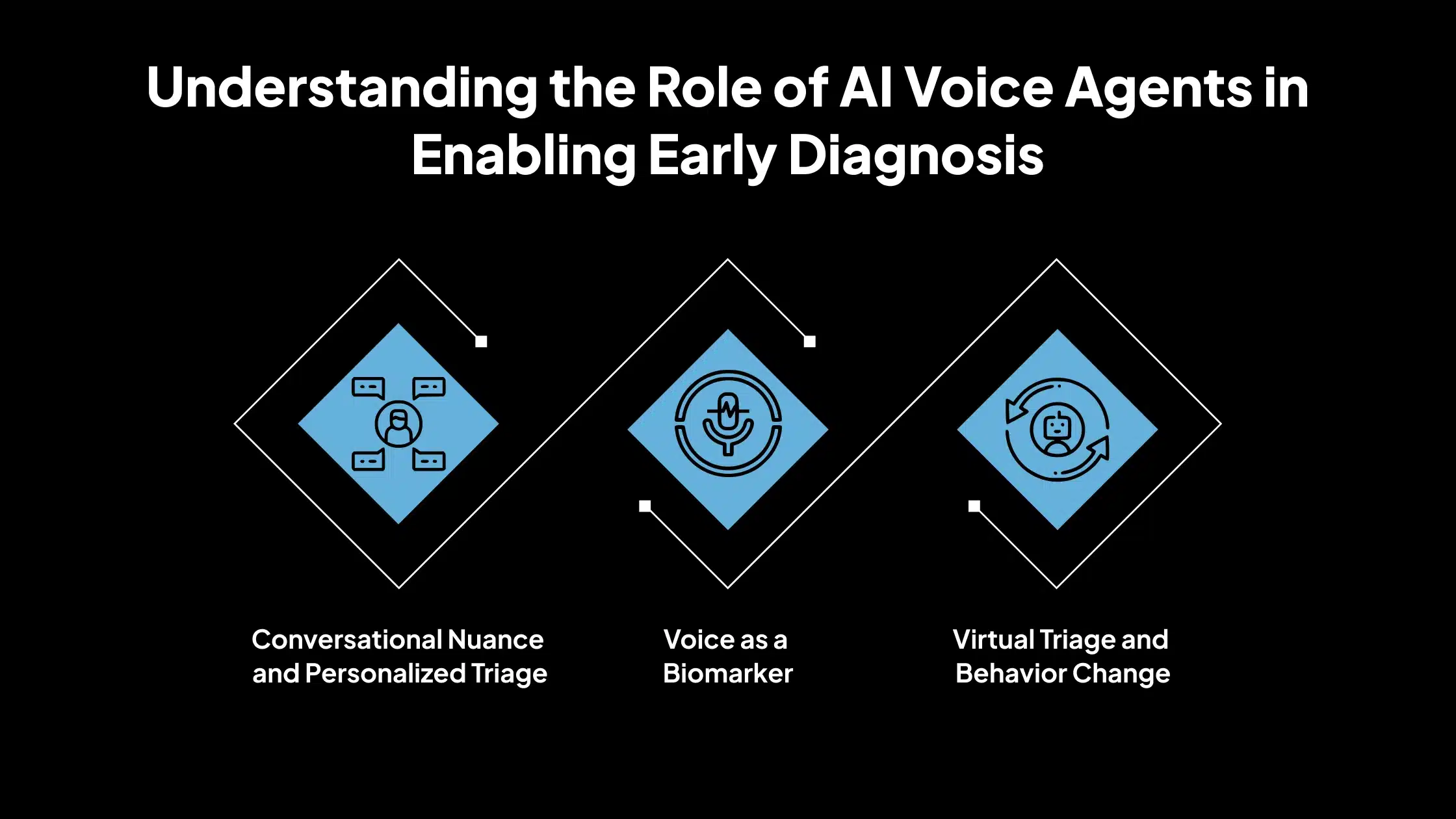
AI voice agents for symptom checking support the early detection of health issues by enabling faster, more accurate, and accessible symptom assessment. Below are the essential ways these agents contribute to earlier diagnosis and care.
1. Conversational Nuance and Personalized Triage
AI voice agents use natural language processing (NLP) to understand and interpret spoken symptoms. These systems engage users in dynamic conversations, asking follow-up questions and adjusting their responses based on user input. In doing so, they gather more detailed symptom information than rigid questionnaires can provide.
For example, specific platforms use rule-based or machine learning models to assess the severity and urgency of symptoms. The AI then suggests the most appropriate next step, whether it is self-care, scheduling a routine appointment, or seeking immediate medical attention. This personalized triage process ensures that patients are directed to the right level of care without unnecessary delays.
2. Voice as a Biomarker
In addition to understanding the content of speech, AI voice agents can analyze vocal characteristics, including pitch, rhythm, and pauses. These features can provide subtle clues about underlying medical conditions, often before physical symptoms become apparent.
- Parkinson’s Disease: AI has demonstrated the ability to detect early-stage Parkinson’s disease through changes in voice modulation and fluency.
- Cardiovascular Issues: Vocal strain and breathing patterns can indicate heart-related conditions.
- Mental Health: Speech patterns, including monotonous delivery or irregular rhythm, can indicate depression or anxiety.
- Type 2 Diabetes: Vocal biomarkers have been linked to early signs of diabetes.
- Laryngeal Cancer: Irregularities in vocal pitch and acoustic features can suggest early cancer development.
Research findings consistently demonstrate the growing capabilities of AI in this field.
These findings suggest that voice-based diagnosis can provide a non-invasive and cost-effective method for detecting diseases early, particularly in primary care and telemedicine.
3. Virtual Triage and Behavioral Change
AI-based virtual triage systems can influence people who might otherwise ignore or underestimate their symptoms. These systems simulate a clinical assessment by asking structured health questions and interpreting responses using evidence-based algorithms.
A notable study reported that 33.5% of users who interacted with an AI triage system initially had no intention of seeking medical care. After using the system, many changed their minds and took appropriate action based on the AI’s recommendations.
These tools are invaluable for reducing delays in urgent situations, such as strokes, infections, or chronic disease flare-ups, by encouraging timely action. They also reduce the burden on emergency services by diverting non-urgent cases to alternative care options.
Exploring Clinical Evidence: AI Voice Agents and Their Role in Early Intervention
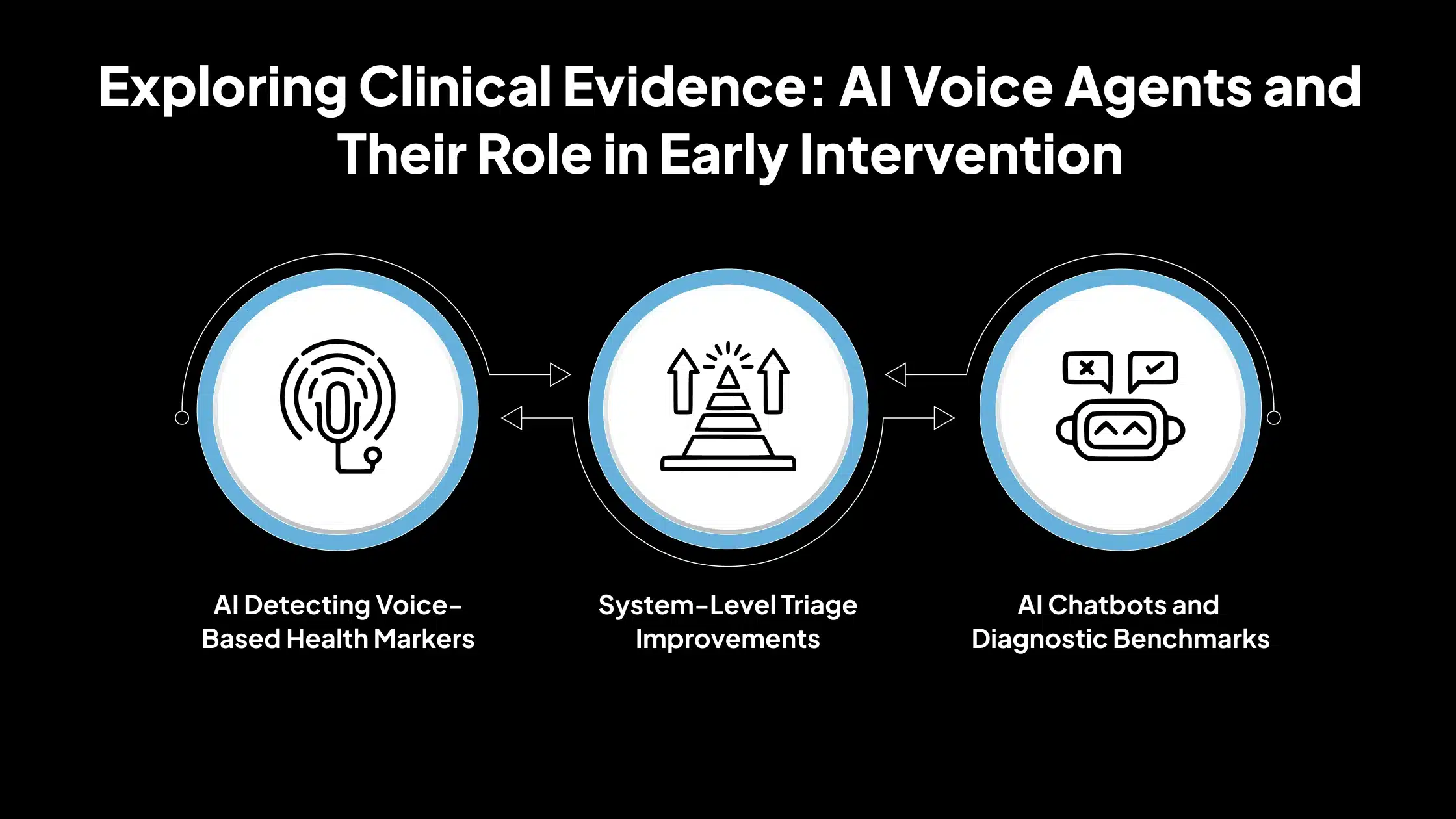
Several studies and pilot programs have demonstrated the potential of AI voice agents and related technologies to improve early detection, clinical triage, and preventive care. Below are the findings organized by category.
1. AI Detecting Voice-Based Health Markers
Parkinson’s Disease Detection
According to the European Medical Journal, AI systems that analyze voice patterns have achieved up to 99% accuracy in detecting early-stage Parkinson’s disease. These systems examine vocal characteristics such as pitch, intonation, and articulation to identify subtle changes that may not be perceptible during routine clinical examinations. Although the results are promising, further validation in diverse populations is necessary before these findings can be widely applied in clinical use.
Type 2 Diabetes Detection
A study reported by Verywell Health found that AI can detect type 2 diabetes using a 6 to 10-second voice recording. The system demonstrated 89% accuracy in women and 86% in men, based on data collected from an Indian population. The model analyzed variations in vocal cord vibrations and speech delivery, offering a non-invasive method for preliminary diabetes screening.
Laryngeal Cancer Detection
According to a recent study, laryngeal cancer detection through variations in vocal pitch and acoustic signals is possible. AI systems demonstrated high accuracy in distinguishing between healthy and potentially cancerous voice samples in early trials. Clinical pilot programs are expected in the coming years to test the technology in real-world healthcare settings.
2. System-Level Triage Improvements
Improved Patient Care Alignment
Research published in Frontiers found that AI-driven virtual triage systems can significantly improve patient engagement with the healthcare system. These systems help align the urgency of the patient’s condition with the appropriate level of care, minimizing unnecessary delays. In many cases, users who had not planned to seek care changed their decisions after interacting with the AI system.
3. AI Chatbots and Diagnostic Benchmarks
“Jarvis Health” Prototype
According to an article published by IJERT, the “Jarvis Health” prototype uses voice-based NLP to perform preliminary health assessments. The tool was designed to assist users in underserved regions where access to clinical care may be limited. It supports regional languages and simplifies symptom collection, helping to bridge the gap between patients and professional care.
The Practical Advantages of Using AI Voice Agents for Symptom Checking
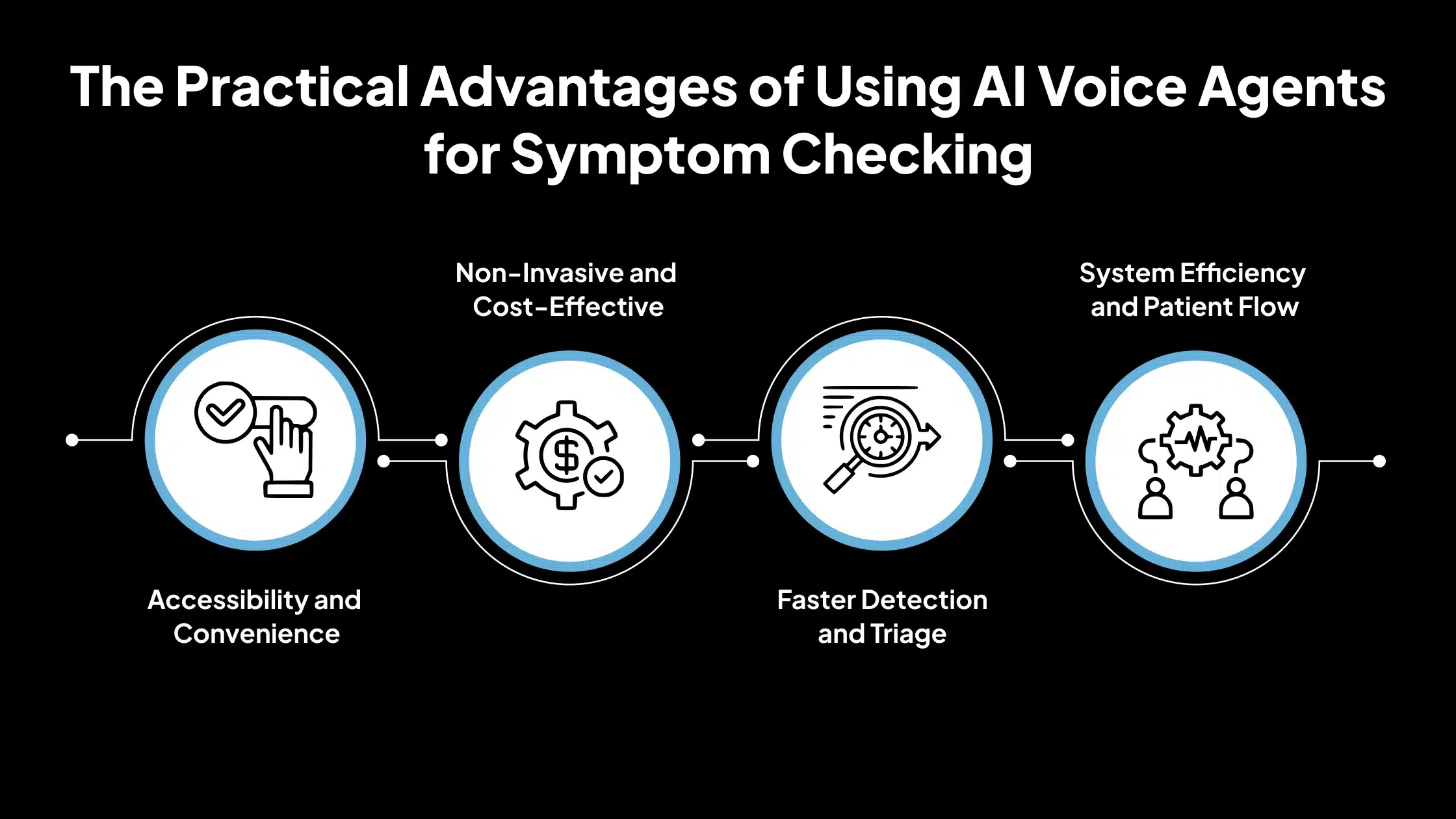
AI voice agents bring several practical benefits to healthcare systems. These include increased accessibility, cost-effectiveness, faster detection of health issues, and improved system performance. Below are the essential benefits of using these AI voice agents:
1. Accessibility and Convenience
AI voice agents are available 24/7 and can operate without the need for a live healthcare professional. This constant availability allows individuals to receive symptom assessments at any time, particularly during non-clinical hours or in emergencies.
Furthermore, these systems are well-suited for remote and underserved regions where medical infrastructure is limited. Voice-based interaction is more intuitive and user-friendly, particularly for individuals with low literacy, the elderly, or those unfamiliar with digital tools.
2. Non-Invasive and Cost-Effective
AI voice agents allow for non-invasive health assessments; users simply need to speak into a phone or smart device. There is no requirement for a physical exam, lab test, or clinical setting during the initial screening phase.
This simplicity helps reduce the cost of early detection. These early alerts are possible without expensive imaging or diagnostic equipment, making the process more affordable and scalable, which is particularly valuable in high-volume or resource-limited settings.
3. Faster Detection and Triage
AI voice agents support the rapid identification of health issues. By processing spoken symptoms in real-time and using clinical decision models, these tools can flag urgent cases much faster than traditional appointment-based systems.
Virtual triage tools have helped patients recognize serious conditions, such as strokes or worsening chronic conditions, sooner. Platforms like AlloMia also emphasize the role of voice agents in proactive monitoring, allowing clinicians to intervene before a patient’s condition becomes critical.
4. System Efficiency and Patient Flow
By automating the initial symptom collection and triage process, AI voice agents help reduce the administrative burden on clinical staff. This means fewer routine calls and more time for healthcare workers to focus on complex cases.
These agents also improve appointment prioritization by directing patients to the appropriate care pathway, whether it involves scheduling an appointment with a general practitioner, a specialist, or seeking emergency care. This streamlines referral processes, shortens wait times, and improves overall patient flow through the healthcare system.
The Future of AI Voice Agents for Symptom Checking: Trends and Possibilities
The role of AI voice agents in healthcare is expected to grow significantly in the coming years. Ongoing developments in technology, clinical research, and policy are shaping how these systems will be used in routine care, disease monitoring, and population health management. The following trends illustrate where the field is headed.
Multimodal and Integration-Ready Systems
The next generation of AI voice agents will be integrated into everyday devices, including home assistants, wearables, and smartphones. These integration-ready systems will allow for continuous health monitoring without requiring active patient intervention.
For example, a voice-enabled smart speaker in a patient’s home could passively monitor changes in speech patterns over time. This can help detect early signs of chronic diseases, neurological decline, or acute events like respiratory distress. Multimodal systems, which combine voice with other inputs such as heart rate or movement, can provide a more comprehensive view of patient health.
Such integration allows for non-intrusive, real-time detection, which is particularly useful for managing chronic diseases and supporting aging-in-place strategies.
Advances in Vocal Biomarker Research
Research into vocal biomarkers is expanding beyond physical conditions to include mental health and systemic diseases. Changes in pitch, intonation, rhythm, and other speech characteristics are being studied as indicators of:
- Depression and Anxiety
- Cognitive Impairment
- Cardiovascular Conditions
- Endocrine Disorders
Recent Studies highlight ongoing efforts to improve the accuracy of voice-based screening tools. These systems are also becoming more privacy-conscious, using on-device processing and anonymization techniques to protect patient data.
As science advances, vocal biomarkers may become part of routine health screenings, allowing for the early identification of conditions before physical symptoms appear. This would enable preventive care interventions, improving outcomes and reducing long-term healthcare costs.
Collaboration Between Policy and Clinical Professionals
For AI voice agents to be successfully integrated into healthcare, strong collaboration between policymakers, clinicians, and technology developers is essential. A hybrid model, where AI handles initial triage or monitoring and clinicians provide the final review, is seen as the most practical and safe way forward.
This approach ensures that AI enhances, rather than replaces, clinical judgment. Diagnostic errors are minimized through human oversight. Patients maintain trust in the healthcare system.
Policymakers will also play a key role in defining ethical standards, regulatory frameworks, and reimbursement models for AI tools. This includes establishing guidelines for transparency, data protection, and clinical validation.
By aligning innovation with safety, this collaborative framework can support responsible growth in AI adoption, ensuring it delivers real value without compromising the quality of care.
Avahi AI Voice Agents for Healthcare: Turning Calls into Patient Care
Managing patient calls is one of the most resource-consuming tasks for healthcare providers. Missed calls often result in missed appointments, lower patient satisfaction, and increased staff stress. Avahi’s AI voice agents for healthcare are designed to address this challenge by managing routine calls, scheduling, and follow-ups, allowing clinical teams to focus on what matters most: patient care.
These AI voice agents are designed for medical offices, clinics, and hospitals that need reliable support in managing call volumes. They are particularly valuable for high-demand environments such as dental offices, specialty care, behavioral health, primary care, and urgent care, where patient communication is frequent and time-sensitive.
What the Agents Manage
Avahi’s AI system is trained to manage daily patient interactions, including:
- Answering routine questions and scheduling requests.
- Booking, rescheduling, and canceling appointments in real-time.
- Sending reminders and follow-ups to reduce no-shows.
- Directing urgent issues straight to staff for immediate attention.
- Managing insurance inquiries, referrals, and call triage.
This capability reduces patient wait times, ensures urgent calls are prioritized, and helps clinics maintain a steady flow of booked appointments.
How It Works
Integrate with Your Phone System
Connects seamlessly to your existing calling platform, managing live and missed calls with office-specific configurations.
Configure High-Volume Requests
Addresses major call drivers—scheduling, renewals, directions, insurance, and referrals—with automatic escalation when necessary.
Rapid Implementation
Full setup and onboarding in a matter of days, supported by real-time monitoring and ongoing assistance.
Avahi is deployed on AWS’s healthcare-ready cloud infrastructure. It is HIPAA, SOC 2, and GDPR compliant, ensuring patient data is processed securely and responsibly. The system scales easily across practices of all sizes and adapts to existing EHR and scheduling systems.
Discover the Avahi AI Platform in Action
At Avahi, we empower businesses to implement advanced generative AI that streamlines operations, improves decision-making, and accelerates innovation—all with zero complexity.
As your trusted AWS Cloud consulting partner, we empower organizations to leverage the full potential of AI while ensuring security, scalability, and compliance with industry-leading cloud solutions.
Our AI solutions include
- AI Adoption and Integration: Leverage Amazon Bedrock and GenAI to enhance automation and decision-making.
- Custom AI Development: Build intelligent applications tailored to your business needs.
- AI Model Optimization: Seamlessly switch between AI models with automated cost, accuracy, and performance comparisons.
- AI Automation: Automate repetitive tasks and free up time for strategic growth.
- Advanced Security and AI Governance: Ensure compliance, detect fraud, and implement secure models.
Want to unlock the power of AI with enterprise-grade security and efficiency? Start your AI transformation with Avahi today!
Frequently asked questions
1. What are AI voice agents for symptom checking and how do they work?
AI voice agents for symptom checking are systems that use speech recognition and artificial intelligence to interact verbally with users. They collect health information through natural conversation, analyze symptoms using clinical algorithms, and provide guidance on next steps. Unlike traditional text-based tools, AI voice agents for symptom checking adapt in real-time to user responses, offering a more interactive and personalized experience.
2. How accurate are AI voice agents for symptom checking in detecting serious conditions?
Recent studies have shown that AI voice agents for symptom checking can detect early signs of conditions such as Parkinson’s disease, type 2 diabetes, and laryngeal cancer with high accuracy—up to 99% in some cases. However, while their accuracy is improving, these tools are not a substitute for clinical diagnosis and should be used as a first step to guide users toward appropriate care.
3. Are AI voice agents for symptom checking useful in remote or underserved areas?
Yes, AI voice agents for symptom checking are particularly valuable in areas with limited access to healthcare. They offer 24/7 support, can function without internet in some configurations, and work well in local languages. This makes AI voice agents for symptom checking an effective tool for increasing access to preliminary healthcare advice in remote or underserved regions.
4. Is my personal health information secure when using AI voice agents for symptom checking?
Yes, many AI voice agents for symptom checking now include privacy-focused features such as on-device processing, voice anonymization, and secure data handling protocols. While no system is risk-free, developers are increasingly aligning with data protection standards like HIPAA and GDPR to ensure user information remains secure.
5. Do AI voice agents for symptom checking support multiple languages or accents?
Yes, many modern AI voice agents for symptom checking are designed to support multiple languages and recognize a variety of accents. This ensures broader accessibility and inclusivity, particularly in multicultural or multilingual regions. Developers of AI voice agents for symptom checking are increasingly training models to recognize diverse speech patterns, thereby improving accuracy and user trust.