Customer Story · Generative AI on AWS

How Ten Trillion Triangles skipped a year-long wait with Avahi

Ten Trillion Triangles, the company behind the T-Pipe AI orchestration framework, wanted benchmarks that test AI agents on problems models alone can’t solve, plus a stable story engine for its game Autogenesis. Avahi stood out as an AWS partner and delivered. In their CTO’s words: it saved at least a few months of dead time.

Amazon Bedrock · Amazon Nova Pro · Kotlin TPipeWriter

$80K to $100K

Estimated wages saved, per the CTO

Nova Pro

In production on Amazon Bedrock

01 / About the Customer

A game studio that turned agent research into enterprise AI

Ten Trillion Triangles was founded in 2021 in West Hartford, Connecticut, as a studio building AI-powered games. Today it builds software tools and infrastructure for developers creating AI agents. Its flagship is T-Pipe, an orchestration framework that treats the agent and the software as one system instead of two separate parts.

The gaming roots still show. Autogenesis, the company’s game, mixes tabletop role-playing in the style of Dungeons & Dragons with AI-written narrative, across worlds from classic fantasy to cyberpunk. It also runs a Risk-style mode where AI agents play each other to test how well they strategize.

Leading technology is McCage Frushel, Chief Technology Officer. His working theory shapes everything the team builds: how you design the agent framework and its harness matters far more than which model sits underneath.

Industry

Gaming entertainment

Model

Amazon Nova Pro

Interviewed

McCage Frushell, Chief Technology Officer

AWS Services

Amazon Bedrock, plus AWS development and test environments

Partner

Avahi, AWS Premier Tier Services Partner

02 / The Problem

Two goals: benchmark AI agents, and ship a story engine that holds up

Ten Trillion Triangles has more ideas than experts to staff them. Two efforts were waiting on people the team didn’t have:

  • Build benchmarks for AI agent frameworks. Plenty exist for LLMs, very few for agents, and Cage wanted tests that agents haven’t beaten yet.
  • Give Autogenesis a multi-agent writing pipeline that keeps characters consistent across recursive turns of play and never stalls mid-story

  • Score narrative quality objectively, so models could be compared on evidence instead of taste

The work needed data scientists and engineers who were already committed elsewhere. Doing it in-house meant waiting a year or two for developer time to open up, then paying for weeks of debugging and the tokens that testing burns.

03 / The Solution

Avahi stood out as an AWS partner, and delivered

AWS introduced Avahi as its generative AI partner. Avahi’s data scientists studied Autogenesis game transcripts and the team’s Kotlin agentic framework, TPipeWriter, then worked independently in four moves:

Built AWS dev and test environments

Amazon Bedrock gave the team one API across several foundation models, so they could compare candidates without running separate model deployments.

Built a three-agent writing pipeline

A Chapter Goals agent sets player objectives. A Plot Summary agent plans NPC responses and consequences, and a Writer agent produces the text at a 20/70/10 mix of narration, action, and dialogue, all inside TPipeWriter.

Moved production to Amazon Nova Pro

DeepSeek V3 stopped abruptly on ethically complex scenes. Avahi benchmarked it against Nova Pro, Nova Lite, and Qwen3 235B on latency and quality, then moved production to Nova Pro.

Put a scorecard on every chapter

An LLM-as-judge framework scores each chapter from 0 to 10 on seven dimensions, from Relevance to Surprise, with strict rules that block inflated scores.

04 / The Results

“It definitely saved us at least a few months of dev time”

$80K to $100K

Wages Cage estimates the team would have spent building this in-house, before counting token spend.

5 out of 5

Client rating in every feedback category, from technical expertise to project management.

8.3 / 10

Average Relevance score across generated chapters. Creativity averaged 7.8 on the same scorecard.

Cage puts the savings at at least a few months and an estimated $80K to $100K in wages. Testing is where it counted most. On Autogenesis, debugging takes more effort than writing the code, and Avahi helped confirm the game actually worked. The team reached something shippable sooner, found out sooner whether its ideas held up, and finished a white paper on the costs and what the work means for the AI industry. Avahi wrapped up with a knowledge transfer on December 1, 2025, and handed over architecture diagrams, model comparisons, and every agent prompt template the next day.
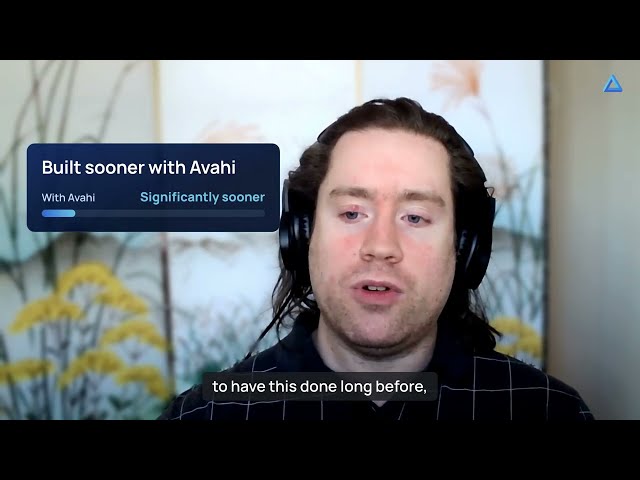

Thanks to them it was possible for us to have this done long before. Without them we’d have to wait possibly a year or two until we could schedule it in for our own developers.

McCage Frushell

Chief Technology Officer, Ten Trillion Triangles

05 / What's Next

From in-house benchmarks to an open arena for AI agents

Ten Trillion Triangles is building its benchmarks into a platform where anyone can bring an AI agent and try to beat them. Vending-bench is the first. More are coming.

The next ones are hard on purpose. Cage wants them to push developers toward real memory and governance systems, so an agent can run headless with no human stepping in to approve each move.

An open benchmark platform

Any developer can bring their agent and test it against the full suite.

Drive-thru bench and Butter bench

Client rating in every feedback category, from technical expertise to project management.

Autogenesis as a strategy test

Agents keep playing each other in the Risk-style game to show how well they plan.

Explore

See how Avahi builds on AWS

Build on AWS with Avahi

Put senior AWS engineers inside your environment

Avahi is an AWS Premier Tier Services Partner. Our engineers build cloud migrations and generative AI workloads directly inside your AWS account, the same way we did for Ten Trillion Triangles. Bring your goals; we’ll scope the path.

AWS-funded proof of concept · Senior engineers · Your cloud, your data