





TL;DR
|
Hiring is no longer losing candidates because of a lack of talent; it’s losing them because of slow, inconsistent, and overloaded recruitment processes.
Today’s candidates expect speed, clarity, and timely communication. Yet many recruitment teams are still spending hours on resume screening, back-and-forth scheduling, and first-round interviews that rarely move the needle.
This results in longer time-to-hire, rising costs, recruiter burnout, and top candidates dropping out before the offer stage.
60% of candidates abandon applications if the process feels too long or repetitive. Top candidates are off the market within 10 days, while the average hiring process still takes weeks.
This growing gap between candidate expectations and recruiter capacity is where voice AI is changing the game.
Voice AI interview technology is helping hiring teams automate early-stage conversations,
screen candidates at scale, and collect consistent, data-driven insights, without sacrificing candidate experience. But speed alone isn’t enough.
The real value comes from tracking the right voice AI metrics and applying AI feedback best practices to make smarter hiring decisions. This is not about replacing recruiters. It’s about removing friction. This blog explores the role of voice AI in recruitment and how launching an AWS proof of concept can help you validate voice AI interviews to drive measurable improvements in recruitment efficiency.
What Voice AI Means and How It Is Applied in the Recruitment Process?
Voice AI refers to the use of artificial intelligence systems that can understand, process, and respond to human speech. In the recruitment process, voice AI is primarily used to enhance candidate screening, automate interviews, and streamline various hiring tasks. By integrating voice-powered technology, recruiters can reduce manual effort, save time, and ensure a more efficient and objective recruitment experience.
For example, voice AI tools can automatically conduct preliminary interviews, assess candidate responses in real time, and even provide feedback on tone, clarity, and content. This helps recruiters quickly identify the best-fit candidates without extensive human intervention.
The Rise of Voice AI Tools in Recruitment
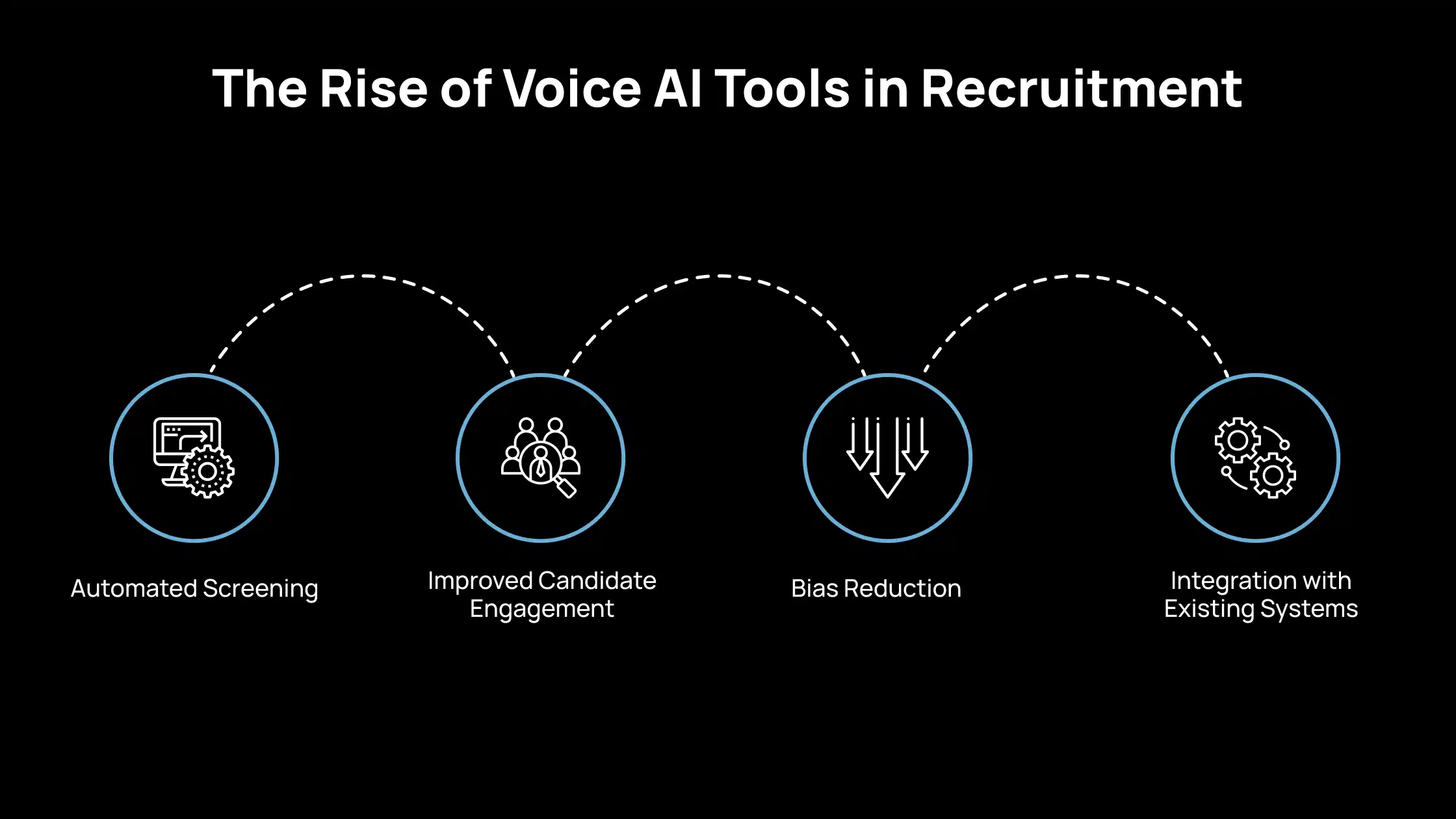
The use of voice AI in recruitment is gaining significant traction due to its potential to enhance efficiency and reduce bias in hiring decisions. Here’s how it’s currently being integrated into hiring workflows:
1. Automated Screening
Many companies are leveraging voice AI to conduct initial candidate screenings, eliminating the need for manual review of resumes and cover letters.
Voice-based systems can ask preset interview questions and evaluate responses against predefined criteria, such as clarity, relevance, and tone. This allows recruiters to focus their time on only the most promising candidates.
2. Improved Candidate Engagement
Voice AI tools are increasingly used to maintain consistent, engaging communication with candidates throughout the hiring process.
Chatbots and voice assistants can schedule interviews, provide feedback, and answer candidate questions 24/7, making the recruitment process smoother and more responsive.
3. Bias Reduction
By having AI handle initial candidate screening, human bias is reduced in the early stages of recruitment.
Voice AI tools are designed to evaluate candidates objectively based on their responses, rather than on factors such as age, gender, or accent. This leads to a fairer and more diverse hiring process.
4. Integration with Existing Systems
Voice AI tools are being integrated with Applicant Tracking Systems (ATS) and other HR software to streamline the recruitment process. This integration helps recruiters track candidate progress, schedule interviews, and manage workflows more effectively.
The Role of Voice AI in Driving Recruitment Efficiency
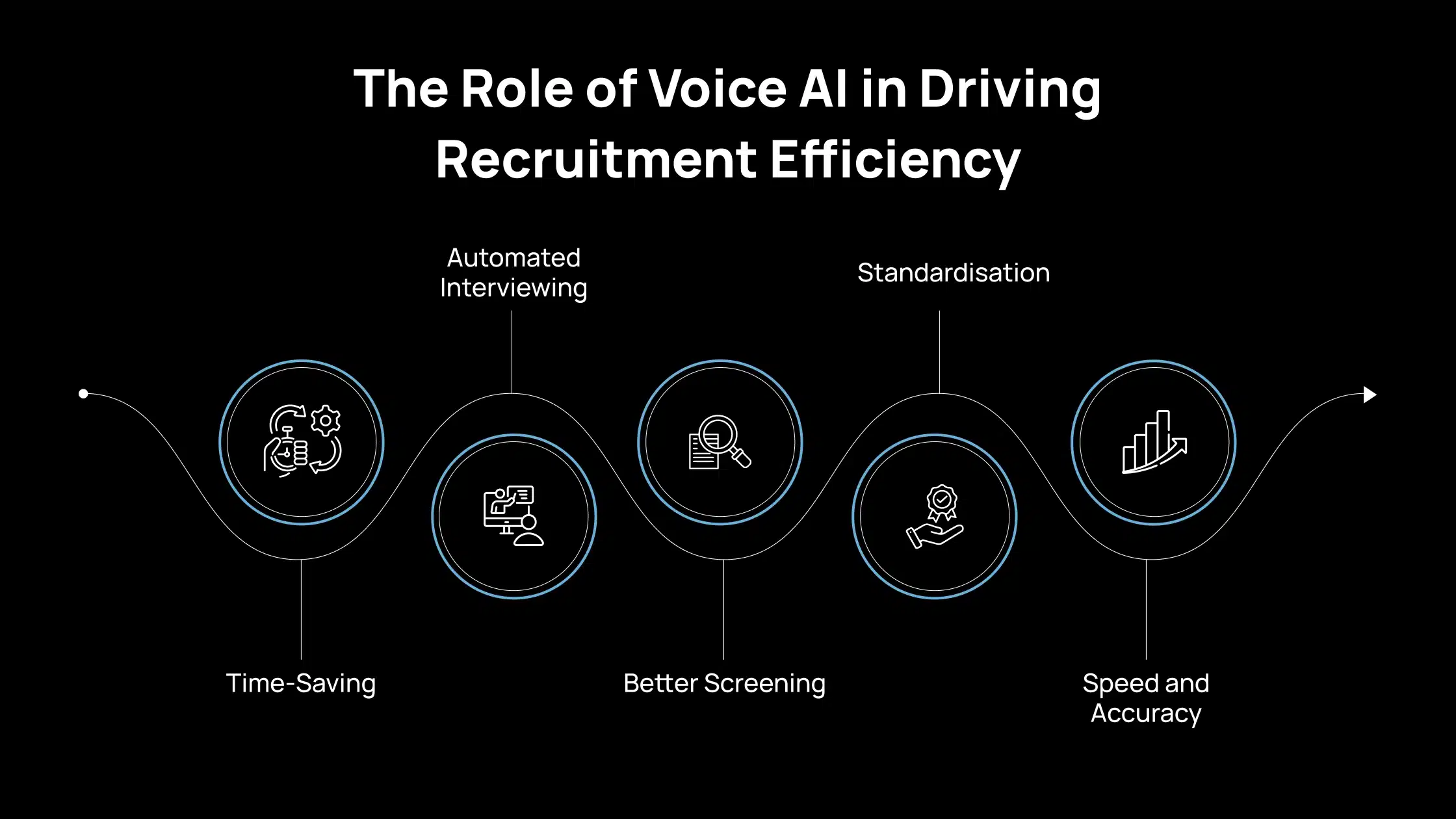
Voice AI can speed up and standardize your hiring process by automating routine tasks and reducing manual effort. Here’s how it improves recruitment efficiency in practical ways.
1. Time‑Saving
Voice AI removes repetitive tasks that usually slow down recruiters. Instead of manually screening resumes, calling candidates to check availability, or scheduling interviews, voice AI handles these steps automatically.
This frees up your time so you can focus on evaluating top talent and strategic hiring decisions. In fact, many organisations using voice AI report faster screening and scheduling without adding HR hours.
For example, a mid‑size tech company using a voice bot for phone screening can cut its time‑to‑screen, while increasing the number of candidates moving to recruiter review.
2. Automated Interviewing
With voice AI, you don’t have to conduct every first‑round interview yourself. AI‑powered voice assistants can ask structured interview questions and assess candidate responses in real time.
They can work around the clock so that candidates can complete interviews outside typical business hours. This means you avoid the cycle of voicemails, return calls, and calendar juggling that eats up recruiter time.
Voice AI interviews can handle yes/no qualifiers, open‑ended questions, and conditional routes based on response quality. This lets you screen more applicants fairly and quickly without extra HR hours.
3. Better Screening
Voice AI goes beyond keyword matching and resume parsing by analysing what candidates actually say and how they say it. These systems use speech recognition and language understanding to score responses against your criteria, such as job knowledge and communication skills.
This approach helps identify best‑fit candidates earlier in the process. It also ensures that factors like tone, relevance, and completeness of responses are consistently measured.
For example, voice AI can improve interview‑to‑offer conversion rates after automating the initial screening stage.
4. Standardisation
One problem with manual hiring is that different interviewers may ask other questions or interpret answers differently. Voice AI delivers the same questions in the same format to every applicant. This ensures a consistent evaluation method and reduces variability in how candidates are assessed.
Consistency leads to fairer comparisons between applicants. It also makes it easier to collect comparable data across interviews, which improves your ability to make hiring decisions based on evidence rather than memory or impressions.
5. Speed and Accuracy
Voice AI can complete tasks faster than humans without getting tired or making simple mistakes. For example, voice systems can immediately log candidate responses, transcribe them accurately (barring edge cases), and score them against predefined job requirements.
This rapid handling improves your time‑to‑hire while reducing human error in data entry, scheduling conflicts, and screening inconsistencies.
According to AI adoption research in hiring, many HR leaders believe that AI significantly improves the speed and quality of talent acquisition — freeing recruiters from routine tasks so they can spend more time engaging with high‑value candidates.
Tracking the Right Voice AI Metrics for Better Recruitment Outcomes
Below are the most critical voice AI metrics that help recruiters consistently evaluate candidates, improve hiring decisions, and increase recruitment efficiency.
| Metric | Description |
| Interview Response Time | Measures how quickly candidates respond, indicating confidence and communication speed. |
| Sentiment and Tone Analysis | Analyzes voice tone to assess enthusiasm, confidence, and cultural alignment. |
| Speech Pattern Analysis | Evaluates pauses and speech flow to gauge clarity and comfort with the role. |
| Response Relevance | Checks how closely answers align with questions and job requirements. |
| Candidate Engagement | Tracks participation and interest levels during the interview |
| Time-to-Hire | Measures the total time from interview to hire to assess process efficiency. |
1. Interview Response Time
Tracking how quickly candidates respond to interview questions can reveal important insights. Voice AI can automatically measure this metric, providing you with data on how quickly candidates think on their feet.
- A faster response time indicates strong communication skills or confidence, while slower responses highlight areas where a candidate may need more time or clarity.
- By monitoring this metric, you can assess how well candidates handle pressure and respond to questions within the interview framework.
2. Sentiment and Tone Analysis
Sentiment analysis helps evaluate a candidate’s emotional state during the interview. Voice AI can analyze a candidate’s tone to gauge their enthusiasm, confidence, or hesitation.
- For example, a positive, enthusiastic tone may signal a strong cultural fit, while a flat or nervous tone could indicate uncertainty.
- Tracking sentiment and tone can give recruiters a sense of how well a candidate aligns with the company culture and the job’s demands, providing deeper insights beyond a candidate’s technical skills.
3. Speech Pattern Analysis
AI systems can analyze speech patterns, including pauses, hesitations, and speech rate.
- These metrics reveal communication skills and confidence levels.
- A candidate who speaks with long pauses or stutters may not be as comfortable with the subject matter or under pressure.
- On the other hand, a candidate who speaks smoothly and hesitantly may convey confidence and clarity.
- These subtle cues, captured by voice AI, help recruiters understand a candidate’s ability to communicate effectively, an essential skill in most roles.
4. Response Relevance
AI can track whether a candidate’s answers are on-topic and well-rounded.
- By comparing responses against predetermined criteria, voice AI ensures that answers remain focused and meet the question’s requirements.
- A candidate who provides concise, relevant answers demonstrates strong communication skills, while off-topic or vague responses may indicate a lack of preparation or focus.
- Monitoring response relevance ensures you evaluate candidates based on their ability to clearly and directly address key job requirements.
5. Candidate Engagement
Candidate engagement during interviews is an important metric that voice AI can track.
- This includes analyzing how actively a candidate participates in the conversation, whether they show interest through follow-up questions, or if they seem disengaged.
- Higher engagement correlates with genuine interest in the role, while low engagement suggests the opposite.
- By monitoring engagement levels, voice AI provides recruiters with valuable data about a candidate’s enthusiasm and suitability for the position.
6. Time-to-Hire
Time-to-hire is a critical metric for measuring the overall efficiency of your recruitment process.
- By tracking the time between the initial interview and the final hire, voice AI can help identify bottlenecks or delays.
- For example, if the process is slowing down after certain stages, AI insights can help you pinpoint where improvements are needed.
- Using voice AI to speed up the screening and interview stages directly reduces time-to-hire, enabling you to make quicker decisions and secure top candidates before competitors snap them up.
Best Practices for AI-Driven Feedback in Recruitment
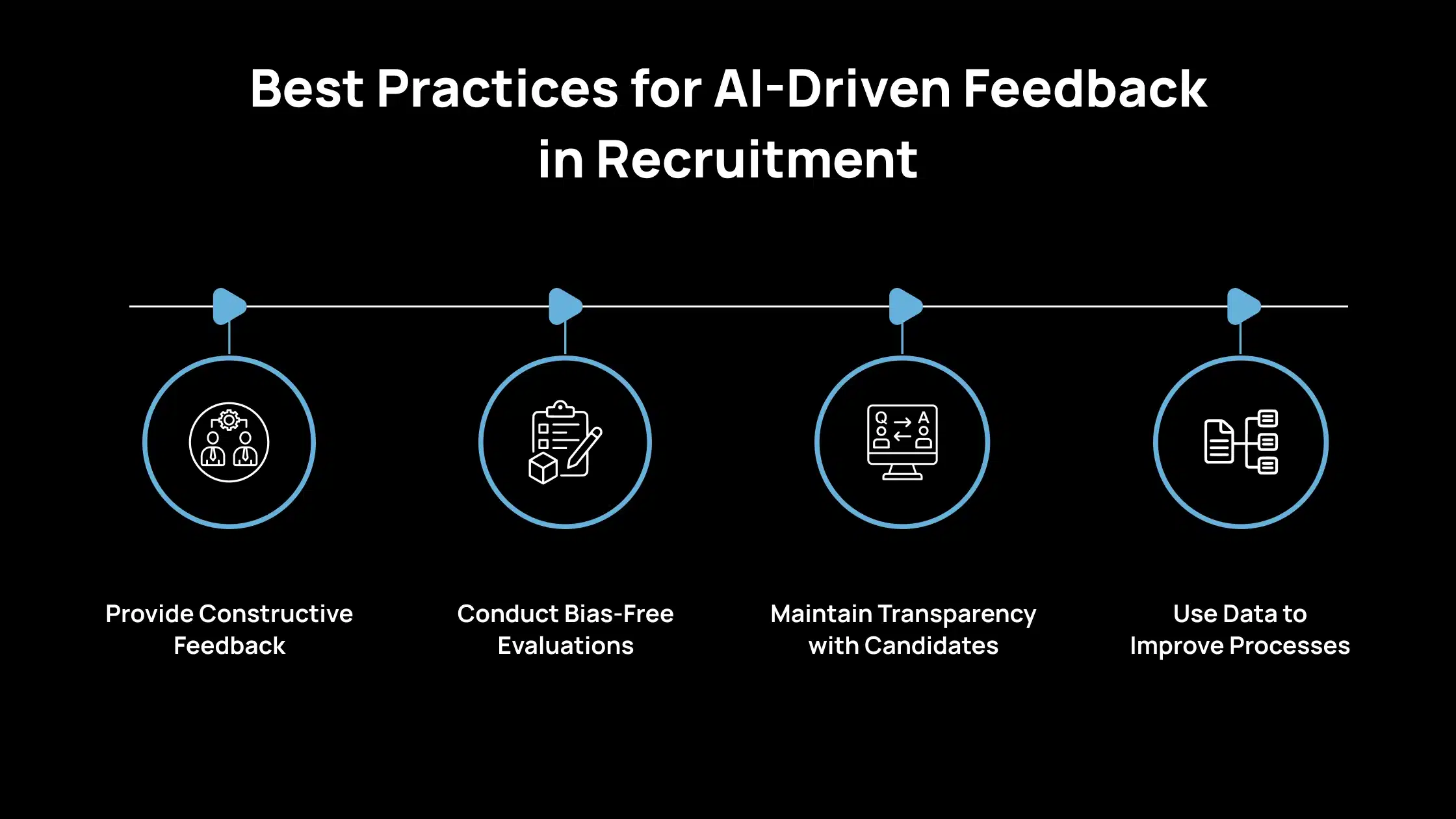
Following AI feedback best practices helps recruiters deliver fair, transparent, and actionable insights while maintaining human oversight in hiring decisions.
1. Provide Constructive Feedback
Using AI-generated insights, you can offer candidates meaningful and actionable feedback after an interview. Voice AI tools analyze candidate responses, highlighting strengths and areas for improvement.
By focusing on the specific elements of the interview, such as clarity, tone, or relevance of responses, you can provide feedback that is clear and valuable.
For example, you could say, “You answered questions confidently, but focusing more on specific examples could make your answers even stronger.” This type of feedback helps candidates improve, whether or not they’re successful in the current process, fostering a positive relationship with your brand.
2. Conduct Bias-Free Evaluations
AI systems evaluate candidates based on objective metrics such as speech clarity, response relevance, and sentiment analysis, rather than subjective impressions.
This ensures that all candidates are assessed fairly, regardless of their background, appearance, or personal traits. By using AI to standardize the evaluation process, you remove human biases that can sometimes influence hiring decisions, leading to more diverse and inclusive hiring outcomes.
3. Maintain Transparency with Candidates
Clear and positive communication of AI-generated feedback is crucial. Candidates appreciate transparency, especially when feedback is delivered constructively.
Be upfront about how AI is used in the interview process and explain how its insights inform your decision-making.
For instance, you could tell candidates, “Our system tracks how quickly and clearly responses are given, which helps us understand communication skills.” This ensures candidates understand the technology behind the process, and it shows respect for their efforts. It also maintains a positive candidate experience, even for those who are not selected.
Use Data to Improve Processes
AI feedback isn’t just for candidates; it’s also a valuable tool for improving your recruitment processes. By analyzing patterns in AI feedback across multiple interviews, you can identify areas where your screening or interviewing methods can be improved.
For example, if AI consistently flags certain types of responses as lacking relevance, you might refine your interview questions to encourage more focused answers. By using data-driven insights, you can continually improve your hiring strategy, making your recruitment process more efficient and effective over time.
The Future of Recruitment: Voice AI’s Role in Talent Acquisition
Looking ahead, voice AI will play a significant role in predictive hiring. By analyzing patterns in candidate responses and historical hiring data, voice AI could help predict future talent needs for an organization.
- For example, AI could identify traits or skills associated with high-performing employees in the past, enabling recruiters to proactively search for candidates who meet those criteria.
- Additionally, predictive hiring could help you anticipate future job openings before they arise, ensuring a continuous pipeline of qualified candidates. This speeds up the hiring process and ensures you’re always prepared to meet the company’s growing needs.
The use of voice AI will allow HR teams to focus more on strategic initiatives, such as talent development and workforce planning, rather than spending time on routine administrative tasks. In the long term, voice AI could be the key to creating a more agile and data-driven recruitment.
What Makes Avahi’s AI Voice Agent Effective for Modern Hiring Teams?
For talent acquisition teams, speed, consistency, and secure handling of candidate data matter at every stage. Avahi’s AI Voice Agent helps HR teams keep hiring moving without adding compliance risk.
- Always-on candidate support: Candidates get instant answers and scheduling help, reducing missed calls and slow follow-ups.
- Secure data flow: Conversations and candidate details are imported into your ATS or CRM in a controlled, compliant manner.
- Less admin work: Screening, scheduling, reminders, and FAQs are automated so that recruiters can focus on decision-making.
- Audit-ready records: Every interaction is logged and traceable, making compliance reviews easier.
- Stronger candidate experience: Candidates stay informed and engaged, while your team avoids repetitive coordination.
With Avahi, teams can scale hiring faster while maintaining trust and compliance.
Discover Avahi’s AI Platform in Action
At Avahi, we empower businesses to deploy advanced Generative AI that streamlines operations, enhances decision-making, and accelerates innovation—all with zero complexity.
As your trusted AWS Cloud Consulting Partner, we empower organizations to harness the full potential of AI while ensuring security, scalability, and compliance with industry-leading cloud solutions.
Our AI Solutions Include
- AI Adoption & Integration – Leverage Amazon Bedrock and GenAI to Enhance Automation and Decision-Making.
- Custom AI Development – Build intelligent applications tailored to your business needs.
- AI Model Optimization – Seamlessly switch between AI models with automated cost, accuracy, and performance comparisons.
- AI Automation – Automate repetitive tasks and free up time for strategic growth.
- Advanced Security & AI Governance – Ensure compliance, detect fraud, and deploy secure models.
Want to unlock the power of AI with enterprise-grade security and efficiency? Start Your AI
Transformation with Avahi Today!
Frequently Asked Questions (FAQs)
1. How does voice AI improve recruitment efficiency?
Voice AI improves recruitment efficiency by automating repetitive tasks such as initial screening, interview scheduling, and first-round interviews. This reduces recruiter workload, shortens time-to-hire, and allows hiring teams to focus on evaluating top candidates and making strategic decisions.
2. What metrics should be tracked in a voice AI interview?
Key voice AI interview metrics include interview response time, sentiment and tone analysis, speech patterns, response relevance, candidate engagement, and overall time-to-hire. Tracking these metrics helps recruiters make consistent, data-driven hiring decisions.
3. Can voice AI interviews reduce bias in hiring?
Yes, voice AI interviews can help reduce bias by evaluating candidates based on objective criteria such as clarity, relevance, and communication quality rather than subjective impressions. When implemented correctly, voice AI enables fair, standardized candidate assessments.
4. How should recruiters use AI-generated feedback responsibly?
Recruiters should follow AI feedback best practices by using insights to support decision-making rather than as a final judgment, ensuring transparency with candidates, and focusing feedback on job-related skills. Human oversight remains essential for contextual and final hiring decisions.
5. Will voice AI replace human recruiters?
No, voice AI is designed to support recruiters, not replace them. While voice AI handles high-volume, repetitive tasks efficiently, human recruiters remain crucial for final evaluations, cultural fit assessments, and relationship building throughout the hiring process.