




Healthcare is stretched thin. Rising patient demand, staff shortages, and a growing pile of administrative work are overwhelming providers and slowing down care.
This is where AI chatbots in healthcare earn their place.
They automate symptom assessment, point patients toward the right level of care, and handle the back-and-forth of appointment scheduling.
They can take on a large share of routine, repetitive queries, cutting wait times and freeing medical staff to focus on the cases that need them. Most are built on conversational AI chatbots that patients can reach any time of day.
Here is how AI chatbots are improving patient triage and appointment scheduling, where they fall short, and what it takes to deploy one securely. Let us start with triage.
TL;DR
|
The Need for Effective Patient Triage
Triage evaluates a patient’s symptoms to decide how urgently they need care. Conventional triage means long phone calls with nurses or in-person visits to an emergency room or urgent care. That creates three recurring problems.
- Delays in care. Patients with non-urgent conditions visit the ER unnecessarily, while those who need immediate attention wait.
- Overwhelmed staff. Nurses and doctors spend valuable time on initial assessments that could be automated.
- Patient frustration. Long waits and uncertainty cause stress and anxiety.
AI chatbots streamline triage by collecting symptoms, analyzing them against medical algorithms, and sorting cases by urgency. Mild cases get self-care guidance, and serious ones are directed to the right facility without delay.
The Importance of Optimized Appointment Scheduling
Once a patient knows they need care, booking should be quick. Often it is not. Three problems show up again and again.
- Long hold times. Patients wait on phone lines to book a simple appointment.
- Limited availability. Finding a convenient slot is hard in busy facilities.
- High no-show rates. Missed appointments disrupt clinics and delay care for everyone else.
How AI Chatbots Improve Patient Triage
Traditional triage required an in-person visit or a phone consultation, which meant long waits and inefficiency. AI chatbots now handle initial assessments, offering fast, structured guidance based on symptoms and history. Here is how that works in practice.
1. Automated Symptom Assessment
Chatbots collect and analyze symptoms using conversational AI and natural language processing. Patients describe symptoms in plain language, the chatbot interprets them, and it asks follow-up questions to refine the assessment. If a patient reports a fever, for example, it asks about duration, severity, and related symptoms. It also factors in past history, medications, and pre-existing conditions for a more accurate read.
2. Assessing Urgency and Guiding Patients
Once symptoms are assessed, the chatbot classifies the case by urgency: mild (self-care), moderate (a primary care visit), or severe (urgent or emergency care). Because many patients head to the ER simply because they are unsure, this guidance routes non-critical cases toward outpatient care and eases hospital congestion. Tools like NHS 111 Online, Ada Health, and Buoy Health already do this.
3. Faster and More Accessible Triage
AI chatbots provide 24/7 triage, so no patient is left without guidance regardless of the time or where they are. Instead of long waits on helplines or in waiting rooms, patients get an instant preliminary assessment. The chatbots work nights, weekends, and holidays, and are reachable through hospital websites, mobile apps, and messaging platforms.
4. Improving Patient Self-Empowerment
Chatbots help patients take an active role in their care with reliable information and clear next steps. They offer insight into possible causes, preventive measures, and self-care tips for minor issues, such as hydration or rest. For someone anxious about an unfamiliar symptom, an immediate, sensible answer can prevent an unnecessary ER trip.
5. Enhancing Efficiency for Healthcare Providers
By taking over repetitive phone inquiries about symptoms, chatbots free staff for direct patient care. They gather essential information before a visit, so doctors can review preliminary data and make better use of consultation time. Sorting patients by urgency also helps hospitals allocate resources where they matter most.
6. Standardized and Consistent Data Collection
Chatbots follow structured questioning protocols, which reduces the risk of missing critical information and gives every patient a uniform experience. The data they collect can feed into electronic health records, giving providers a complete history for diagnosis and planning. Unlike human triage, which can vary between nurses, a chatbot applies the same standardized guidelines every time.
7. Supporting Doctors with AI-Driven Decisions
Chatbots are not a replacement for doctors, but they are useful decision-support tools. They analyze symptom patterns against large medical databases to suggest possible conditions, which physicians can use as a reference to prioritize cases. Some also provide ongoing monitoring for chronic conditions, flagging when medical attention is needed.
The same standardized intake also pairs well with medical scribing, which turns those structured notes into clean EHR records with less manual work.
How AI Chatbots Improve Appointment Scheduling
Conventional scheduling means long hold times, back-and-forth emails, and manual coordination. AI chatbots make booking more accessible, personalize it, and cut missed appointments. Here is how.
1. 24/7 Availability and Accessibility
Chatbots run around the clock, so patients can book any time without waiting for office hours. Instead of calling, navigating phone menus, and waiting for a representative, patients get instant scheduling help, even late at night or on weekends. Integrated into hospital websites, apps, and messaging services, they also free administrative staff from repetitive booking requests.
2. Personalized Scheduling
Chatbots weigh patient preferences, provider availability, and urgency to recommend the right specialist and slot. By syncing with clinic and hospital calendars, they show only open times and prevent double bookings. Tools like Zocdoc and CHAT360 use this approach to match patients to doctors and improve clinic efficiency.
3. Automated Appointment Reminders
Chatbots send SMS, email, or app reminders with the date, time, location, and any pre-visit instructions. Timely alerts keep patients prepared, make them less likely to forget, and lift attendance while reducing the administrative load on staff.
4. Easy Rescheduling Options
When a patient cannot make an appointment, the chatbot lets them reschedule on the spot, no phone call required. That reduces last-minute cancellations and helps providers fill vacant slots, so fewer appointments and less revenue go to waste.
5. Two-Way Confirmation System
Chatbots ask patients to confirm appointments, which helps clinics predict attendance and adjust schedules. Real-time confirmation lets providers track who is coming, indicate availability, and reallocate slots that would otherwise sit empty toward urgent cases.
6. Data-Driven Insights
By analyzing past behavior, chatbots can predict likely no-shows and send extra reminders or flexible options to high-risk patients. This improves appointment adherence, smooths patient flow, and reduces the disruption that missed visits cause.
Challenges and Limitations of Healthcare AI Chatbots
AI chatbots have improved healthcare in real ways, but they come with limits worth planning for. Four challenges come up most often.
1. Data Privacy Concerns
Chatbots handle sensitive patient information, so a weak setup risks exposure to attackers and serious privacy violations. They must comply with regulations like HIPAA in the United States and GDPR in Europe, which means strong encryption, secure storage, and strict access controls. This is a build decision, not an afterthought, and the right cloud foundation makes it far easier to get right.
2. Potential Biases in AI Algorithms
Chatbots rely on models trained on medical data, and if that data is not diverse, the model can produce biased or unfair advice. Some diagnostic tools have shown lower accuracy for patients with darker skin tones, for example. Training on a wide range of demographics, including different ages, ethnicities, and conditions, is essential to avoid skewed results.
3. Need for Constant Updates
Medical knowledge changes quickly as new research, treatments, and guidelines emerge. A chatbot that is not updated can give advice based on outdated guidance. Unlike clinicians who stay current through training, a chatbot does not learn on its own and needs a deliberate process for keeping its knowledge base accurate.
4. Risk of Inaccurate Guidance
A chatbot can assist with initial symptom assessment, but it lacks the clinical judgment of a trained professional. It recognizes patterns but cannot perform a physical exam or weigh a complex history the way a doctor can. Chatbots should support clinicians, not replace them, and patients should treat their guidance as a starting point rather than a final answer.
Most of these come down to how the chatbot is built and governed. Getting AWS security and compliance right from the start is what keeps a healthcare chatbot safe to use at scale.
Case Study: Extract’s AI Chatbot on Amazon Bedrock
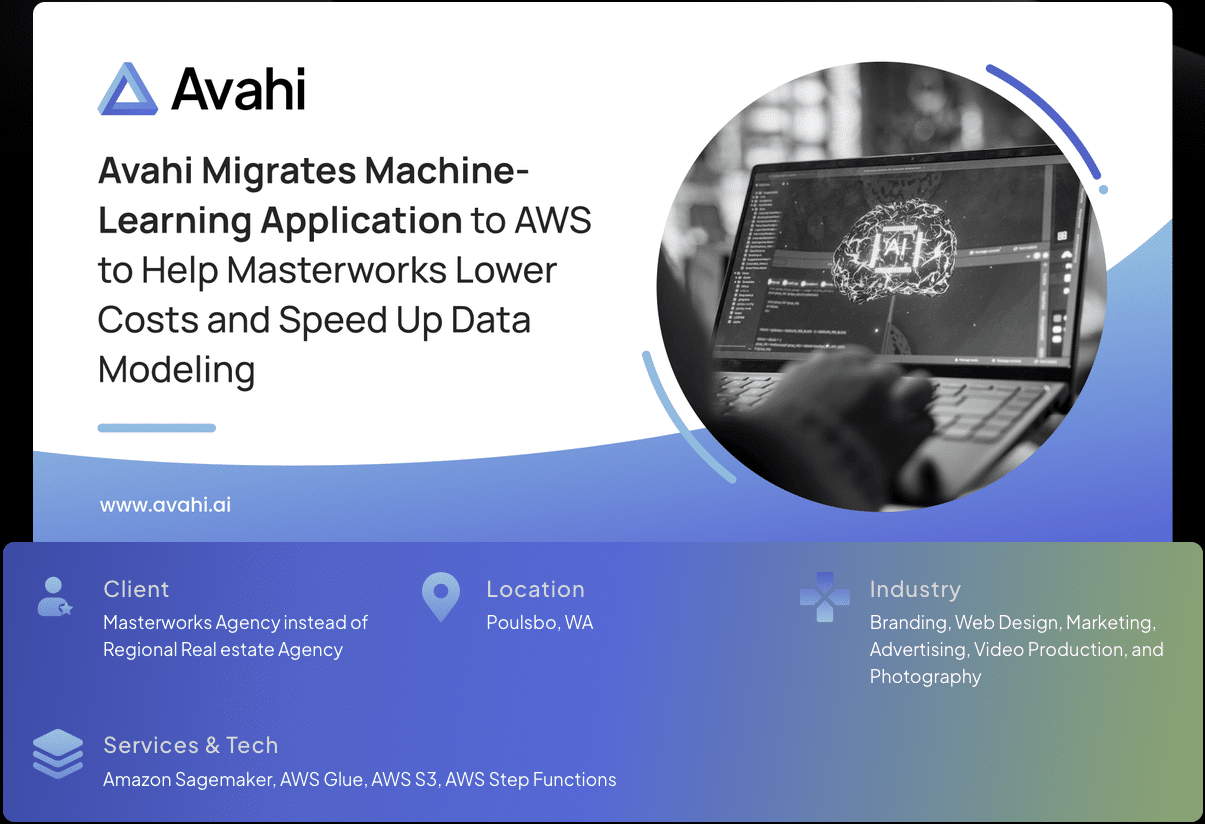
Extract, a workforce optimization and payment solutions provider, needed fast, on-demand answers from a scattered set of internal manuals and online resources.
Compiling that information by hand was slow, created bottlenecks, and risked inaccuracies when teams responded to employee and customer questions.
We built an AI-driven chatbot on Amazon Bedrock and AWS Lambda, with Amazon S3 for secure storage and a Pinecone vector database for real-time retrieval.
The result is quick, data-backed responses drawn from Extract’s own content, on a secure and scalable AWS foundation. The same retrieval-first pattern is what underpins a healthcare triage or scheduling chatbot that has to answer from approved, current information.
Read the full Extract case study.
Build Healthcare AI Chatbots Securely on AWS with Avahi
A healthcare chatbot is only as good as the foundation it runs on. The hard part is not the conversation; it is the security, compliance, and integration with the systems a provider already uses. That is the work we do.
We are an AWS Premier Tier Services Partner, the highest tier in the AWS Partner Network, with six AWS Competencies, including Healthcare, 200+ cloud launches, and 200+ AWS certifications. We design and build custom AI solutions on AWS, from symptom-assessment and scheduling chatbots to the secure data pipelines behind them, run through a four-phase process: Discovery and Scoping, Solution Architecture, Build and Iteration, and Deployment and Handoff.
Healthcare is one of our core industries, and we have built secure, retrieval-based chatbots on AWS in production.
Want to scope a secure healthcare chatbot for your organization? Get in touch with our team.
Frequently Asked Questions
How Do AI Chatbots Assist in Patient Triage?
AI chatbots automate initial assessments by collecting symptoms, analyzing urgency, and guiding patients to the right level of care, whether self-care, a primary care visit, or emergency services. This reduces unnecessary ER visits, speeds up access to care, and lets clinicians focus on critical cases.
How Do AI Chatbots Improve Appointment Scheduling in Healthcare?
They provide 24/7 booking, sync with provider calendars, and offer instant rescheduling. By eliminating long phone waits and preventing double bookings, and by sending automated reminders, they cut no-show rates and improve clinic efficiency.
What Are the Main Benefits of Using AI Chatbots for Triage and Scheduling?
They improve accessibility, reduce administrative workload, and lift the patient experience. Faster triage, accurate symptom assessment, and smooth scheduling help optimize resources, lower costs, and deliver timely, patient-centered care.
Are AI Chatbots Reliable for Medical Triage?
They are effective for preliminary assessment but should not replace medical professionals. They provide structured symptom analysis based on algorithms and medical databases, which helps patients make informed decisions while clinicians handle complex or urgent cases.
What Challenges Do AI Chatbots Face in Healthcare Settings?
The main ones are protecting data privacy under HIPAA and GDPR, reducing algorithmic bias, and keeping medical knowledge current. There is also a risk of inaccurate guidance if a chatbot is poorly trained or unmonitored, which is why human oversight is essential.